Beyond the Drone. Why Mission Autonomy Will Decide the Next War
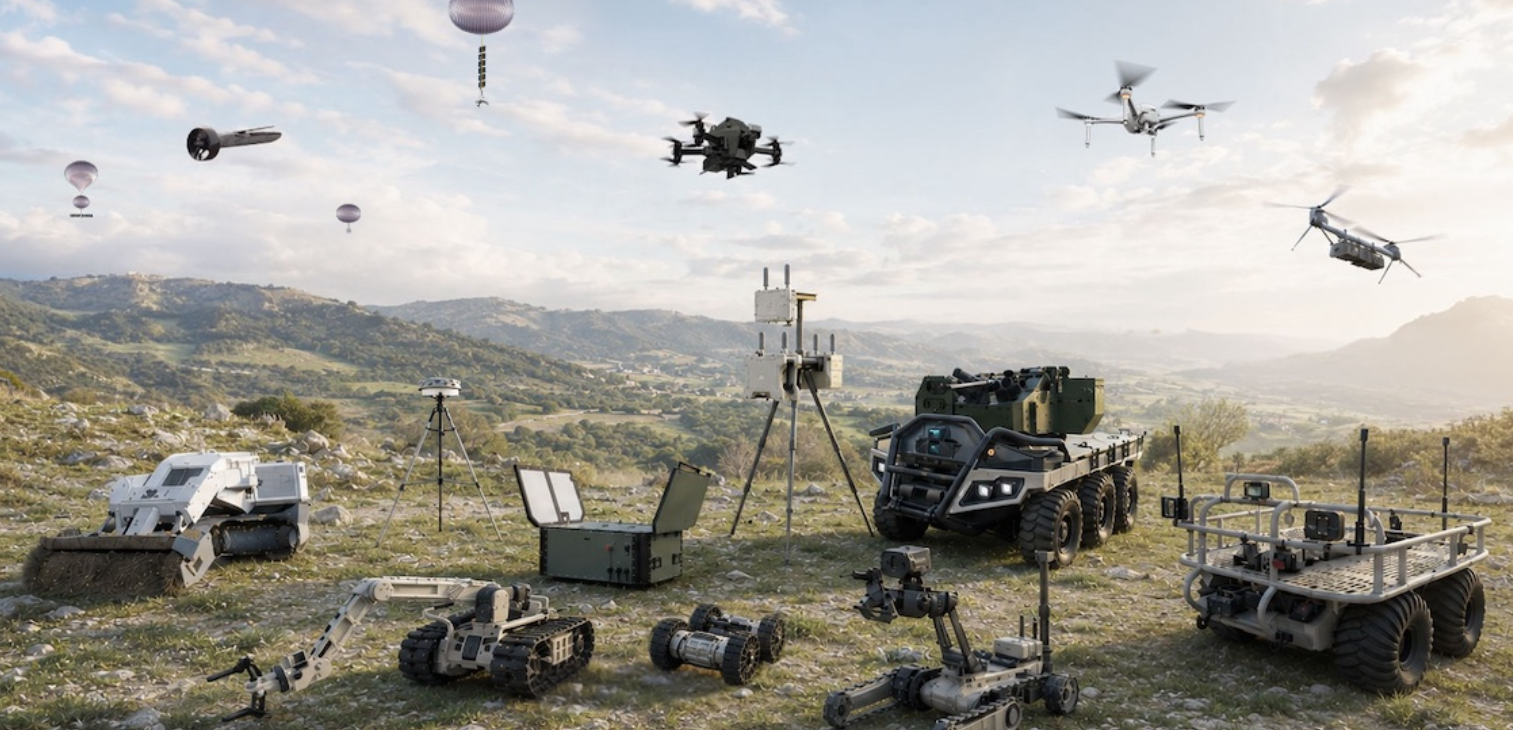
For decades, defense innovation has followed a predictable logic: build better platforms. Faster aircraft. Higher-altitude sensors. Longer-endurance drones. More data. Always more data.
But what if the next decisive advantage is not the platform at all?
What if it’s what happens between them?
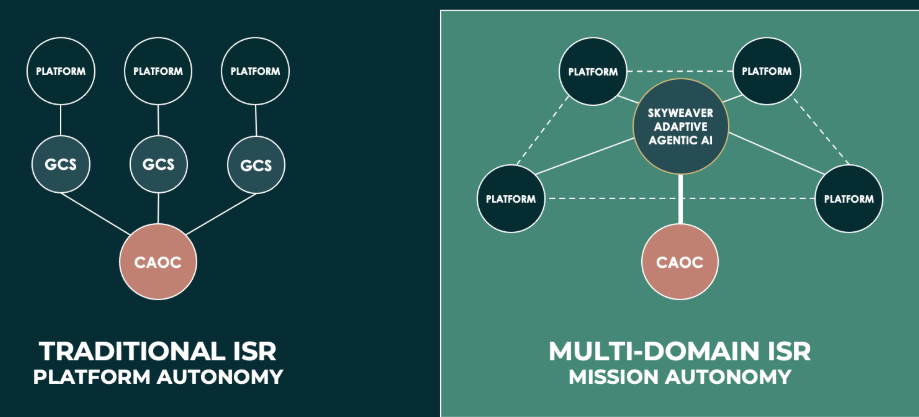
This is the emerging fault line in modern defense thinking—and it is defined by a single, increasingly critical distinction: platform autonomy versus mission autonomy.
Platform autonomy is already here. Drones that fly themselves, systems that stabilize, self-correct, and execute predefined tasks with minimal human input. It reduces cost, extends operational reach, and keeps humans out of harm’s way. It is important—but it is no longer differentiating.
Every serious defense program is moving in that direction.
Mission autonomy, however, changes the game entirely.
It moves the focus from the vehicle to the outcome. From isolated capability to coordinated intelligence. It asks a radically different question: not “can this system operate on its own?” but “can this ecosystem think and act as one?”
This is where concepts like SkyWeaver enter the battlefield—not as another platform, but as an intelligence layer.
The shift is subtle, but profound.
Traditional ISR (Intelligence, Surveillance, Reconnaissance) architectures are fragmented by design. One platform collects. Another transmits. A ground station processes. Analysts interpret. Command centers decide. This TCPED cycle—Tasking, Collection, Processing, Exploitation, Dissemination—works, but it is slow. And in modern conflict, speed is survival.
Because adversaries do not wait.
Mission autonomy compresses that entire chain into a continuous loop. Sensing, reasoning, planning, action, adaptation—all happening at the edge, in near real-time. The system doesn’t just collect data; it interprets it, prioritizes it, and acts on it across a network of platforms without waiting for human orchestration.
The result is not better information.
It is faster decisions.
And in contested environments, that difference is everything.
Consider a multi-domain scenario: a high-altitude platform detects an anomaly. Traditionally, that signal would move through layers of analysis before triggering a response. With mission autonomy, the system itself identifies significance, tasks a nearby drone for closer inspection, correlates incoming data, and updates the intelligence picture instantly. By the time a human operator intervenes, the system has already acted.
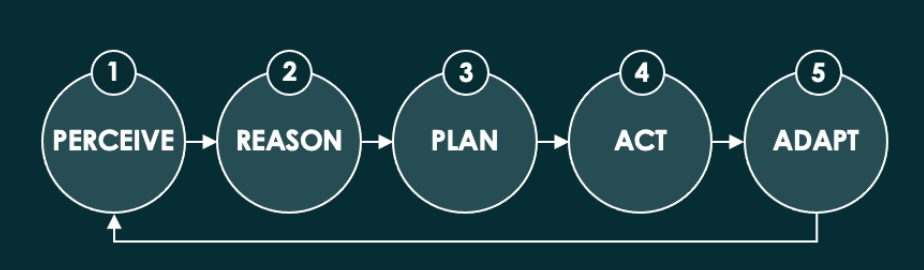
This is not automation. It is orchestration.
The architectural implication is equally significant.
Mission autonomy is not tied to a specific platform. It exists in software, as an intelligence layer that operates across an entire ecosystem. This means that every additional platform—whether airborne, ground-based, or stratospheric—does not just add capability. It strengthens the network. It compounds the system’s effectiveness.
Scale becomes intelligence.
This creates a powerful shift in how defense value is measured.
Traditionally, value was tied to hardware: procurement cost, flight hours, sensor resolution. In a mission-autonomous architecture, value is tied to outcomes: how quickly data becomes actionable intelligence, how effectively threats are identified and addressed, how resilient the system remains under stress.
This is not just a technological evolution. It is a commercial one.
Revenue models begin to align with intelligence delivery rather than platform usage. Systems become harder to replace—not because of their hardware, but because of their integration into operational workflows. Dependency shifts upward, from machines to the intelligence layer that connects them.
And yet, this transformation comes with strategic risk.
The more autonomy shifts to the mission level, the greater the reliance on software, data integrity, and system trust. Failures are no longer isolated—they propagate across the network. Resilience must be designed into every layer, from edge processing to decision logic.
Because when machines begin to decide collectively, errors scale just as fast as success.
Still, the trajectory is clear.
The next defining advantage in defense ISR will not be who owns the most platforms—but who can make them think together.
Mission autonomy is not an upgrade.
It is a redefinition of control in the age of distributed warfare.
And in that world, the winner will not be the one who sees more.
It will be the one who understands—and acts—first.


.jpg)