BeastTX - 45 Milliseconds to Win. The Race That Could Redefine Autonomous Warfare
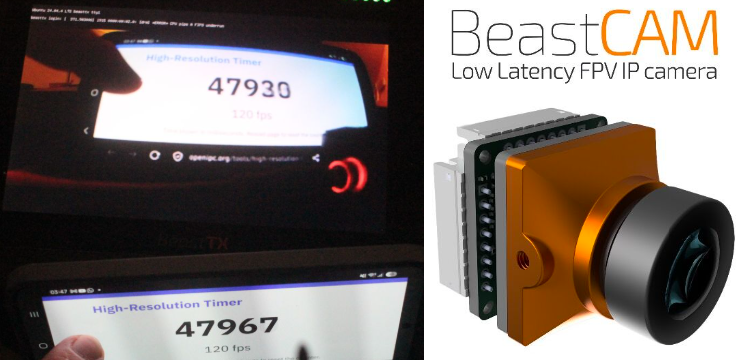
In modern autonomous warfare, victory is increasingly measured not in kilometers, firepower, or platform size.
It is measured in milliseconds.
When a drone operator spots an obstacle, identifies a target, or maneuvers through electronic interference, every fraction of a second matters. The difference between a successful mission and a failed one can be smaller than the blink of an eye.
That is why a seemingly technical announcement from BeastUAS may signal something much bigger than a product update.
A digital FPV ecosystem delivering just 35 to 45 milliseconds of glass-to-glass latency has crossed an invisible but critical threshold.
The significance lies in what happens when delay becomes almost imperceptible.
For years, FPV operators accepted a tradeoff. Analog systems offered responsiveness but sacrificed image quality. Digital systems delivered superior visuals but often introduced latency that could become noticeable during high-speed maneuvers.
This compromise shaped the market.
Pilots chose between what they could see and how quickly they could react.
Now that boundary is beginning to disappear.
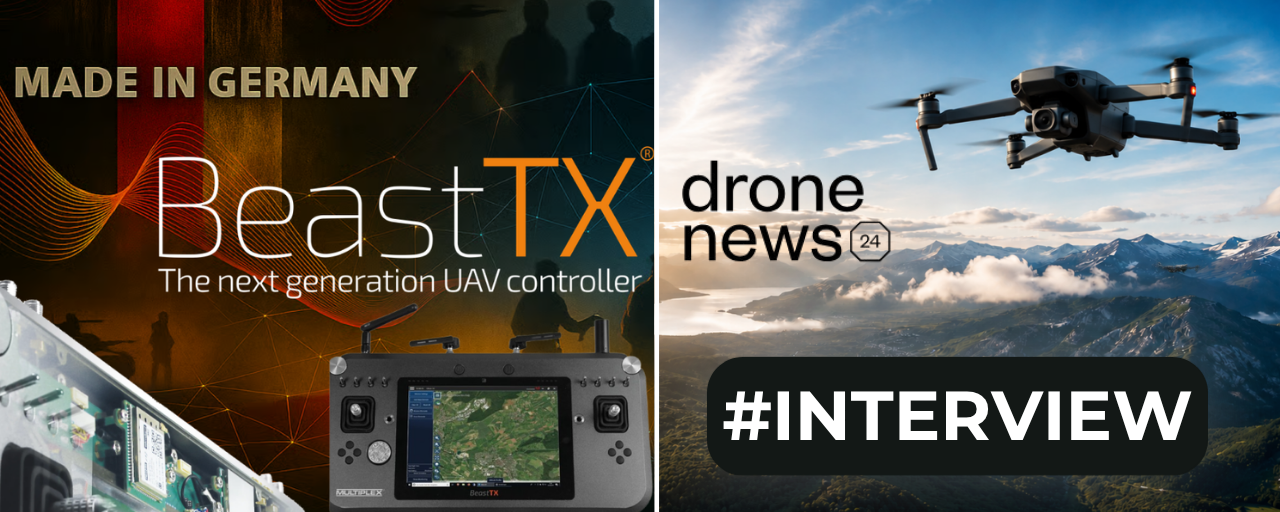
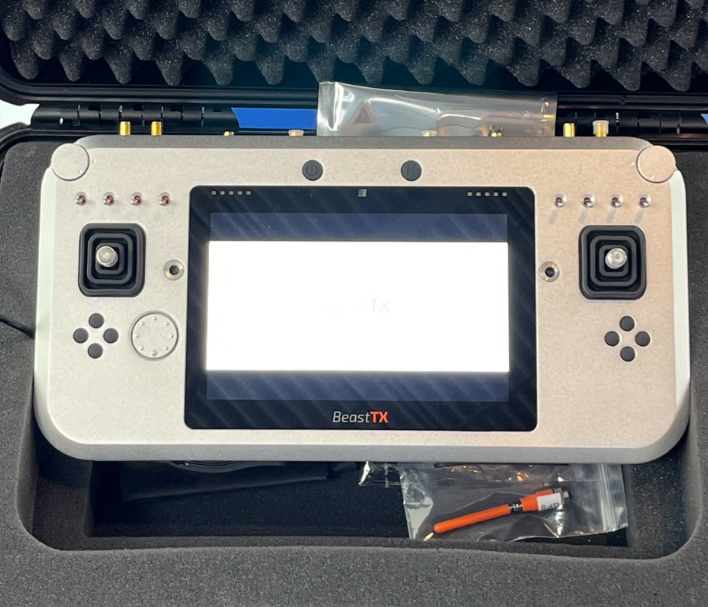
With BeastCAM S, a high-speed digital datalink, and the BeastTX ground station working as an integrated chain, the objective is clear: deliver digital image quality without sacrificing reaction speed.
That achievement matters because FPV technology has evolved far beyond its hobbyist origins.
What was once a niche segment of drone racing has become a major driver of military innovation, industrial inspection, infrastructure monitoring, emergency response, and autonomous system development.
Every one of these applications depends on a simple principle.
The operator must trust what they see.
And trust depends on timing.
If a video feed lags behind reality, decision-making degrades instantly. The faster the vehicle moves, the more severe the problem becomes. At high speeds, even tens of milliseconds can translate into meaningful differences in positioning, obstacle avoidance, and mission effectiveness.
This is where low-latency streaming becomes strategically important.
The industry often focuses on platform specifications, endurance, payload capacity, flight range, or AI capabilities. Yet these advantages lose value if operators cannot interact with the system effectively.
The human-machine interface remains a decisive factor.
Ultra-low latency creates a feeling that pilots describe as direct control rather than remote operation.
The aircraft becomes an extension of the operator.
That experience changes performance.
But the implications extend beyond manually piloted drones.
The future of uncrewed systems increasingly depends on integrated ecosystems rather than standalone hardware. Cameras, radios, edge computing, AI processing, autonomous navigation, command-and-control software, and operator interfaces must function as a unified architecture.
In this environment, latency becomes a system-wide metric.
Every component contributes.
Every millisecond matters.
This explains why BeastUAS emphasizes the completion of an ecosystem rather than individual products. The camera alone is not the breakthrough. The transmitter alone is not the breakthrough.
The breakthrough is the chain.
As defense and commercial operators demand greater interoperability, integrated ecosystems are becoming the industry's defining competitive advantage.
This trend mirrors developments across the broader technology sector.
The most successful technology companies rarely win because a single device is superior. They win because each component strengthens every other component.
Platforms outperform products.
Ecosystems outperform platforms.
Drone technology is following the same trajectory.
The next generation of operators will expect seamless connectivity between sensors, communications, autonomy, and command systems. They will expect HD-quality imagery, real-time responsiveness, secure data transmission, and interoperability from a single architecture.
Meeting those expectations requires solving one of the hardest problems in engineering:
Reducing delay without sacrificing performance.
That is why a number like 35 milliseconds deserves attention.
Not because it sounds impressive on a datasheet.
But because it represents a step toward making digital systems feel instantaneous.
And in environments where decisions are made at high speed, instantaneous often becomes synonymous with competitive advantage.
The drone industry is entering a new phase.
The conversation is no longer just about flying farther or carrying more.
It is about seeing faster.
Because the future may belong to the operator, company, or military force that can move from observation to action before everyone else.
And increasingly, that advantage is measured in milliseconds.