Autel’s FCC Showdown Signals a Turning Point in the Drone War
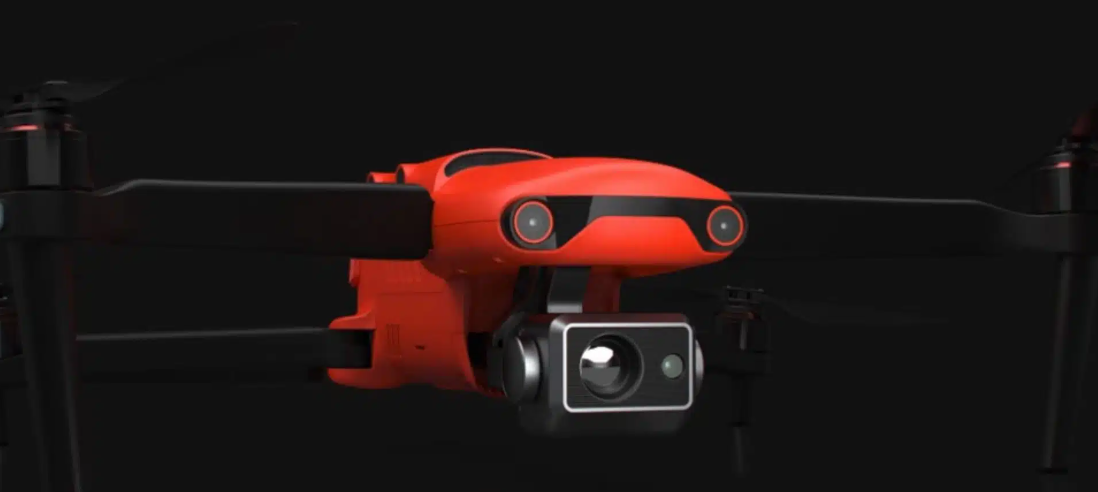
utel Robotics has escalated its battle with U.S. regulators, and the implications stretch far beyond one company’s access to the American market. In a sharply argued reply filed at the Federal Communications Commission (FCC), Autel claims its placement on the agency’s Covered List rests on a troubling foundation: undisclosed evidence, borrowed allegations aimed at its competitor DJI, and a process that, according to the company, cuts against constitutional due process.
At the heart of Autel’s filing in ET Docket 26-23 is a claim that should make regulators uneasy. The company argues it was never granted meaningful access to the case against it—despite the severity of the sanction, which effectively blocks its products from U.S. communications infrastructure. Instead, Autel alleges that the FCC relied on classified material and broad, category-based assumptions typically associated with geopolitical risk—not individualized technical assessments. This is where the company anchors its strongest legal argument, invoking the Fifth Amendment.
Autel’s legal strategy leans heavily on the precedent set in Ralls Corp. v. CFIUS (2014), where the D.C. Circuit ruled that even national security decisions must provide affected parties with access to unclassified evidence and a genuine opportunity to respond. Autel applies that logic directly to the FCC’s process. The message is clear: national security cannot serve as a blanket justification for opacity.
But this filing is more than legal doctrine. It introduces, for the first time in a consolidated public document, detailed operational claims about how Autel devices handle data. According to sworn declarations, flight data is stored locally by default and not automatically transmitted to company servers. Communications and stored data are protected by AES-128 or AES-256 encryption—standard protocols widely used across the industry. The company further asserts that no third parties have access to its drone software or user accounts.
These claims are not theoretical. They are testable. And that is precisely the point. By placing verifiable technical specifics into the public record, Autel is forcing a shift in the debate—from generalized suspicion toward measurable facts. If U.S. national security agencies possess evidence that contradicts these assertions, the burden is now on them to surface it. If they do not, the credibility of the original designation will come under increasing scrutiny.
Equally significant is Autel’s insistence on separating itself from DJI. While both companies were named in Section 1709 of the FY2025 National Defense Authorization Act, Autel argues that regulatory actions have improperly treated it as an extension of its larger rival. The filing criticizes external briefs that recycle DJI-specific controversies—ranging from telemetry concerns to software vulnerabilities—as if they apply universally. Autel’s position is blunt: evidence against one company cannot justify restrictions on another without independent review.
This distinction matters because it strikes at the core of how the FCC constructed its Covered List. The December 2025 Public Notice applied a sweeping approach, effectively grouping all foreign-made drone manufacturers into a single risk category. Autel’s challenge exposes the tension between national security policy and administrative fairness. Should regulators act broadly to mitigate risk, or must they prove each case individually?
For now, the FCC is the only battlefield where Autel is making its stand. Unlike DJI, which is pursuing parallel litigation in federal courts, Autel’s fate hinges entirely on the agency’s review process—a process that could take years. The precedent of China Unicom suggests that patience may be required. But the stakes are immediate. The outcome will shape not only Autel’s future but the broader regulatory framework for foreign technology firms operating in the United States.
This case is quickly becoming a litmus test. If the FCC upholds its decision without addressing Autel’s procedural claims, it risks reinforcing the perception that industrial policy is being enforced under the banner of national security. If it revisits the record and demands transparent, evidence-based justifications, it could mark a shift toward a more accountable regulatory model.
Either way, one thing is certain: the drone war is no longer just about hardware. It is about rules, rights, and who gets to see the evidence before the ban comes down.
%20(1)%20(1).jpg)