Air Defense as a Service. Ukraine Is Privatizing Protection From the Sky
For most of modern history, air defense has belonged almost exclusively to the state.
Radar stations, anti-aircraft guns and missile batteries protect cities, military bases and strategic infrastructure. A factory owner can hire guards, install cameras and build cybersecurity—but protecting the airspace above the factory?
That has traditionally been the military's job.
Ukraine may now be challenging that assumption.
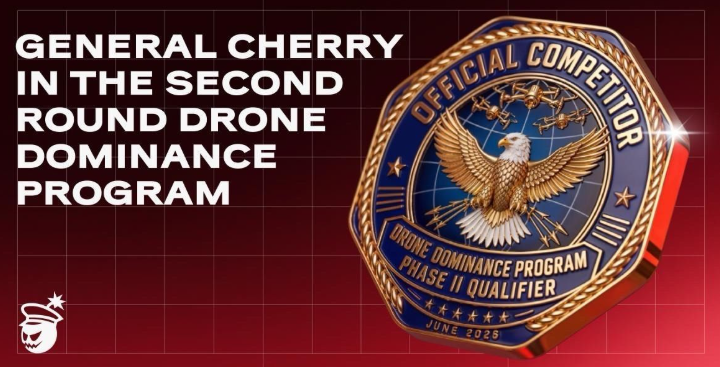
General Cherry has announced Private Air Defense, a service designed to allow Ukrainian businesses to organize licensed protection of factories, offices, warehouses and other critical sites against drone attacks.
Think about what that means.
Air defense is becoming a business service.
From security guards to drone pilots
The concept goes considerably beyond installing a counter-drone device on a roof.
According to General Cherry, the offering can include its own pilots, mobile response teams and counter-drone systems.
Companies can also have their personnel trained through the General Cherry Academy.
And businesses wanting greater independence can receive technology and support to develop their own private air-defense capability.
This creates an unusual new category somewhere between traditional physical security and military air defense.
A company might already employ guards to protect its gates.
Cybersecurity specialists protect its network.
Fire-suppression systems protect its buildings.
Now another layer is emerging:
people and technology dedicated to protecting the airspace immediately around the facility.
Why would businesses need this?
Ukraine's wartime environment provides an obvious answer.
A modern factory or logistics center can represent an enormously valuable target.
Destroying one building can disrupt production, eliminate inventory, interrupt supply chains and stop hundreds of employees from working.
And inexpensive drones have fundamentally changed the economics of attacking such infrastructure.
The attacker no longer necessarily needs an expensive cruise missile to threaten an industrial site.
That creates a difficult problem for national air-defense networks.
Military systems must protect cities, energy infrastructure, command centers, troops and countless other targets simultaneously.
Not every warehouse can have a military air-defense battery parked beside it.
Private counter-drone protection offers another model.
Instead of asking the national network to provide the final defensive layer everywhere, individual businesses could potentially defend their own facilities against certain classes of drone threats.
Cybersecurity—but for the sky?
There is an interesting analogy with cybersecurity.
Governments defend national networks and investigate major cyber threats.
But companies don't wait for the military to install their firewalls.
Banks, factories and technology companies build their own defenses because their infrastructure is valuable enough to justify permanent protection.
Drone warfare may be pushing physical security in a similar direction.
The state protects the national airspace.
The military handles sophisticated aerial threats.
But private operators could provide localized protection against drones around individual facilities where legally permitted.
That would make air defense increasingly distributed.
Thousands of protected sites could become individual nodes rather than relying exclusively on a relatively small number of centralized military systems.
But private air defense raises big questions
The concept also creates obvious challenges.
Who decides what constitutes a hostile drone?
How are private systems coordinated with military and civilian aviation?
How are authorized Ukrainian drones identified?
What happens when multiple private defensive networks operate close together?
And exactly which counter-drone technologies can legally be operated by private organizations?
These are not minor details.
Once private organizations begin participating in something previously associated with national air defense, regulation, identification, communications and coordination become as important as the interceptor itself.
The announcement describes the protection as licensed, but the short description does not explain the regulatory architecture or operational boundaries in detail.
Those questions will matter enormously as the concept develops.
A glimpse of a much larger change
Ukraine has repeatedly accelerated technologies and organizational models that once seemed experimental.
Private air defense could be another example.
And its relevance may eventually extend beyond wartime Ukraine.
Airports worry about drones.
Prisons worry about drones.
Power plants, refineries, ports, data centers, military suppliers and major public events increasingly worry about drones.
If inexpensive unmanned aircraft become a permanent security problem, demand for localized counter-UAS protection will grow far beyond the battlefield.
Perhaps the surprising part isn't that private air defense is appearing.
Perhaps it is that we assumed air defense would remain exclusively governmental forever.
Twenty years ago, companies hired cybersecurity teams because the internet created a new attack surface.
Today, drones are creating another one.
The next corporate security department might not only protect the building.
It might protect the sky above it.