A Two-Ship Exercise, A Much Bigger Message. How China Is Redrawing the Map Around Taiwan Without Firing a Shot
At first glance, it looked insignificant.
Two naval vessels.
A few hours of maneuvering.
No missiles launched.
No dangerous confrontations.
No international crisis.
Yet the recent joint naval exercise between China and Indonesia in waters east of Taiwan may prove far more consequential than its modest scale suggests.
Because Beijing increasingly understands something that many governments still underestimate:
The most effective territorial expansion in the twenty-first century may not require military conquest.
It may require repetition.
Repetition of claims.
Repetition of patrols.
Repetition of maps.
Repetition of presence.
Until the world gradually accepts a new reality.
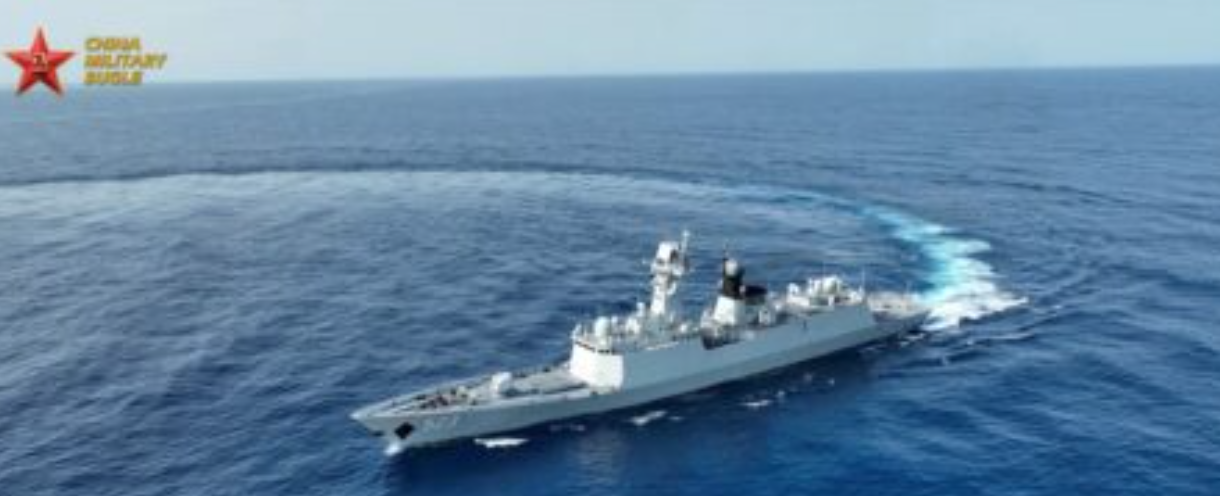
The August exercise involved only two ships: the Indonesian Navy frigate KRI I Gusti Ngurah Rai and the Chinese People's Liberation Army Navy frigate Honghe. Indonesian officials described the activity as a routine passing exercise, a standard naval tradition conducted by friendly navies around the world.
On the surface, they are correct.
But geopolitics is rarely about what happens.
It is about where it happens.
And why.
The exercise took place in waters that Taiwan considers part of its Exclusive Economic Zone.
That detail transforms an otherwise ordinary naval interaction into a strategic signal.
For years, Beijing has pursued a sophisticated campaign designed to erode Taiwan's international standing without triggering open conflict. Military pressure is only part of the strategy. Equally important are legal arguments, administrative measures, coast guard deployments, diplomatic pressure, and carefully constructed narratives designed to normalize China's claims.
This approach is often described as grey-zone warfare.
Not war.
Not peace.
A constant pressure campaign occupying the space between the two.
The objective is not immediate confrontation.
The objective is gradual acceptance.
If Chinese vessels operate repeatedly in disputed waters, if foreign governments remain silent, and if international attention shifts elsewhere, the activity slowly becomes normalized.
Over time, repetition becomes precedent.
And precedent becomes perceived reality.
That appears to be what makes this episode significant.
Only weeks before the exercise, China conducted extended coast guard operations in the same area. Beijing justified those operations as law enforcement activities. Now another international actor has participated in exercises within the same waters.
Whether Indonesia intended it or not, Beijing gains an opportunity to present the event as evidence that another country accepts China's interpretation of maritime jurisdiction.
That is strategically valuable.
Not because the legal position changes overnight.
But because perceptions begin to shift.
This is how influence accumulates.
Incrementally.
Patiently.
Without dramatic headlines.
The broader context matters.
The waters east of Taiwan are becoming increasingly central to regional competition.
Japan and the Philippines have expanded maritime cooperation.
The United States continues strengthening ties with regional partners.
Taiwan seeks greater international engagement despite diplomatic isolation.
At the same time, China is intensifying efforts to assert authority across maritime areas it considers connected to its sovereignty claims.
The result is a growing contest over narratives as much as geography.
Who controls the waters?
Who defines the rules?
Whose interpretation becomes accepted internationally?
These questions matter because maritime disputes are rarely settled only by legal documents.
They are often shaped by behavior.
What ships do.
What governments tolerate.
What becomes routine.
The danger is not that a two-ship exercise suddenly changes the status quo.
The danger is that dozens of similar activities over the next decade might.
This is why Taiwan reacted publicly.
Not because of immediate military concerns.
But because sovereignty can be weakened gradually through silence.
Every patrol.
Every exercise.
Every administrative declaration.
Every maritime restriction.
Each action may seem minor in isolation.
Together they create momentum.
China has demonstrated remarkable patience in pursuing such strategies elsewhere. Rather than seeking a dramatic breakthrough, Beijing often relies on cumulative pressure that slowly expands operational freedom while testing international reactions.
If resistance proves limited, the next step becomes easier.
And then the next.
And then the next.
What makes this strategy particularly effective is that it rarely appears urgent.
Global attention naturally focuses on crises involving missiles, aircraft, and military escalation.
Yet some of the most important geopolitical shifts occur without any of those.
A routine exercise.
A coast guard patrol.
A legal declaration.
A map.
A diplomatic note.
By the time the implications become obvious, the new reality may already be established.
That is why this episode deserves attention far beyond the number of ships involved.
The story is not about two frigates crossing the sea.
It is about a larger contest over the future status of Taiwan and the maritime order of the Indo-Pacific.
Because Beijing's objective may not be to change the map overnight.
It may be to convince the world that the map has already changed.

.jpg)