46 Grams That See the World. Why Sony’s AS-DT1 LiDAR Could Reshape Automation and Drone Industry?
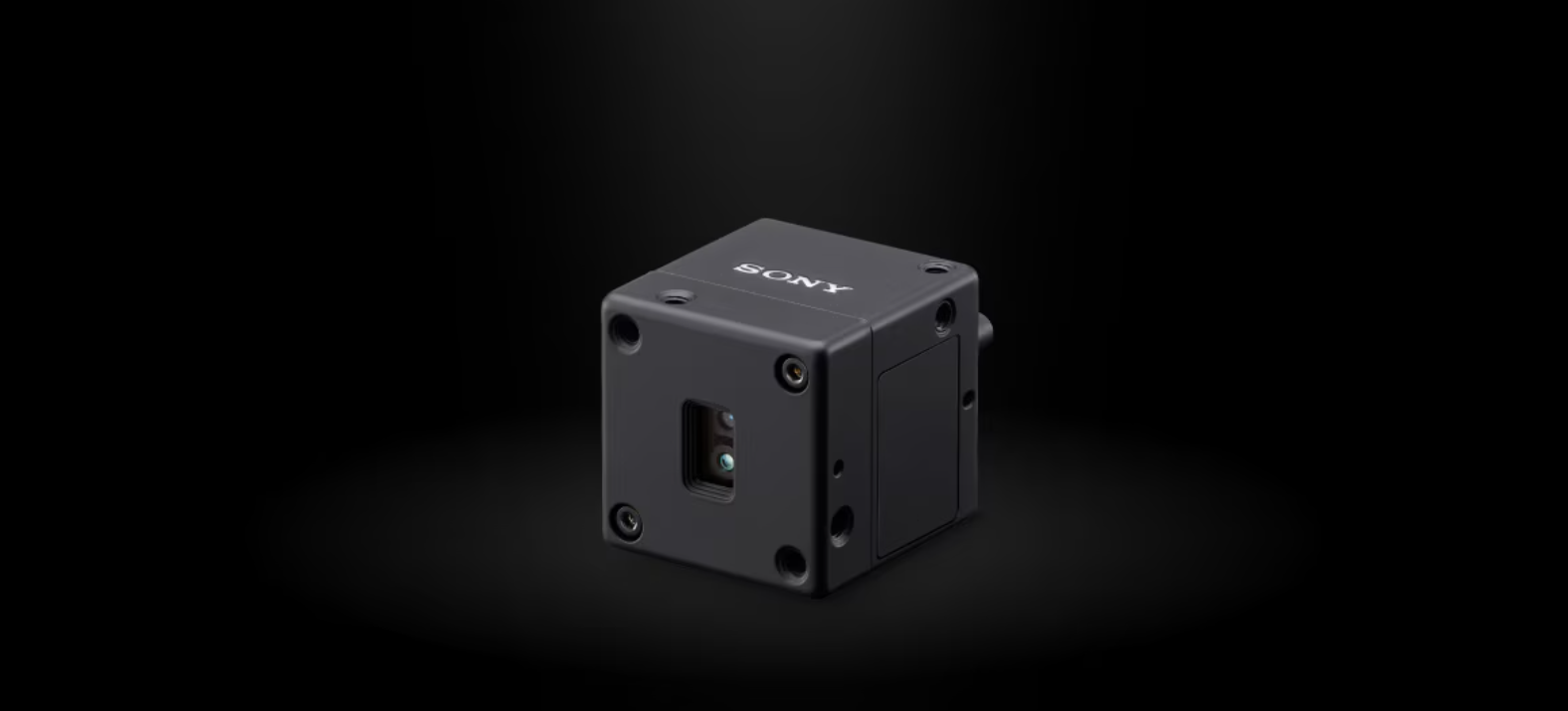
It weighs less than a chocolate bar.
It fits in the palm of your hand.
And yet, the AS-DT1 LiDAR Depth Sensor may be one of the most quietly disruptive pieces of hardware entering the automation race today.
In a world obsessed with AI models, cloud computing, and software ecosystems, we often forget a fundamental truth:
machines can only act as intelligently as they can perceive.
And perception starts with sensors.
The Power of Seeing in 3D
The AS-DT1 is not just another sensor. It represents a shift toward precision perception in constrained environments—a capability that has long limited drones and compact robots.
Using direct Time-of-Flight (dToF) LiDAR technology, the sensor measures distance by calculating how long it takes light to reflect back from an object. Combined with a SPAD (Single Photon Avalanche Diode) sensor, it achieves an extremely high sensitivity—even detecting minimal reflected light.
The result:
a system that can “see” in three dimensions with remarkable accuracy.
At 10 meters, it maintains a margin of error of just ±5 cm—indoors and outdoors.
That level of precision isn’t just engineering bragging rights.
It’s operational reliability.
Where Other Sensors Fail, It Performs
Most conventional ranging methods struggle with real-world complexity.
Low contrast objects.
Dark surfaces.
Floating particles.
These are the blind spots of many machine vision systems.
The AS-DT1 challenges these limitations. It can accurately measure objects that are typically difficult to detect—including low-reflectivity materials and airborne elements.
This is particularly critical in environments such as:
- Warehouses filled with mixed materials
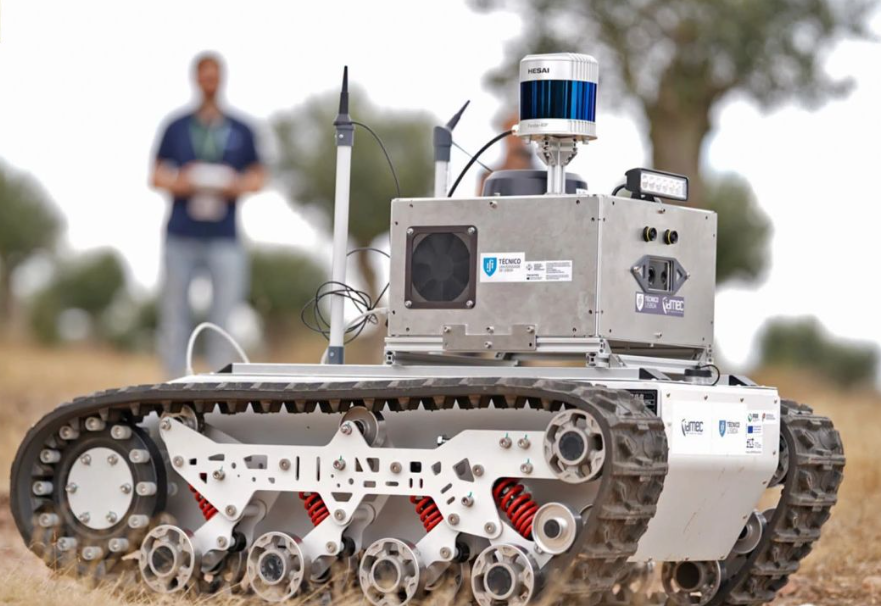
- Retail spaces with dynamic layouts
- Industrial sites with unpredictable surfaces
In these settings, perception errors don’t just reduce efficiency—they create risk.
The Hidden Enabler of Autonomous Systems
The real story is not the sensor itself, but what it unlocks.
With a range of up to 40 meters indoors and 20 meters outdoors, the AS-DT1 enables machines to operate safely at a distance—even in bright daylight conditions.
This opens the door to applications that were previously difficult or expensive to scale:
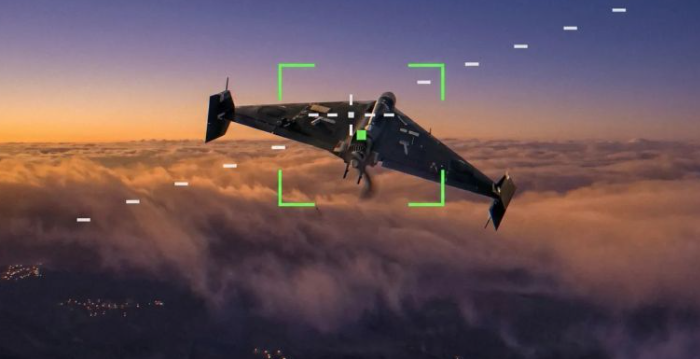
- Autonomous drones inspecting bridges or highways
- Robots navigating dense warehouse environments
- Inspection systems accessing hazardous infrastructure
- Real-time spatial mapping in logistics networks
In each case, the sensor becomes a foundational layer of autonomy.
Not visible, not glamorous—but essential.
The Economics of Miniaturization
What makes the AS-DT1 particularly compelling isn’t just performance—it’s form factor.
At just 46 grams and approximately 3 cm in size, it is one of the smallest and lightest sensors of its kind.
That matters.
Because in drones, every gram reduces flight time.
In robotics, every cubic centimeter competes for space.
Miniaturization doesn’t just improve design—it expands the range of possible applications.
Add to this a robust aluminum housing, and you get a sensor designed not for laboratory conditions, but for industrial reality.
Why This Matters Now
We are entering an era where automation is no longer confined to factories.
Autonomy is moving into cities, infrastructure, healthcare, logistics.
But scaling autonomy requires more than intelligent software. It requires reliable, precise, and scalable perception systems.
That’s where the AS-DT1 fits.
It is not the headline technology.
It is the enabler behind the headlines.
And in many ways, that makes it more important.
The Bigger Picture
There is an old saying in technology:
“Amateurs talk software. Professionals talk hardware constraints.”
The AS-DT1 is a reminder of that truth.
Because while the world debates algorithms, the future is also being shaped by small, almost invisible components that quietly solve hard physical problems.
Sensors like this don’t go viral.
They don’t attract hype cycles.
But they define what machines can and cannot do.
And increasingly, they define the boundaries of automation itself.

.jpg)
.jpg)