$1M Missiles vs $1K Drones - The War That Broke Defense Economics

Modern warfare has exposed an uncomfortable truth: it’s too expensive to defend effectively.
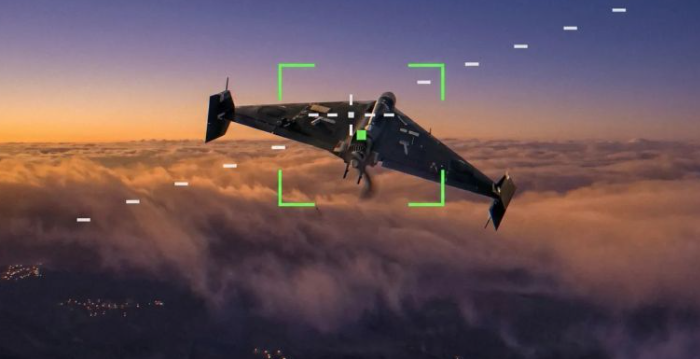
Across recent conflicts, advanced air defense systems are routinely firing million-dollar missiles to destroy drones that cost only a few thousand dollars—or less. The imbalance is striking. But more importantly, it’s unsustainable.
This is not a failure of engineering. It’s a failure of economics.
For decades, air defense systems were designed to counter high-value threats—fighter jets, ballistic missiles, and sophisticated cruise systems. In that context, expensive interceptors made sense. The cost of failure was far greater than the cost of engagement.
But drones have rewritten the rules.
They are cheap, widely available, and easy to scale. Instead of relying on a single high-value platform, attackers can deploy dozens—or hundreds—of low-cost systems simultaneously. The goal is not precision. It’s saturation.
And that’s where traditional air defense begins to break.
Each interception decision becomes a financial trade-off. Fire an expensive missile and destroy a low-cost drone—or hold fire and risk damage. Either choice comes at a price.
In this new battlefield, cost has become a weapon.
The result is a strategic paradox: the more capable your defense system, the more expensive it becomes to operate against cheap threats. Over time, even the most advanced systems can be drained—not by superior technology, but by relentless affordability on the attacker’s side.
This has triggered a quiet but urgent shift across the defense industry.
Startups and major contractors alike are racing to develop new interception solutions that are dramatically cheaper, faster to produce, and optimized specifically for small aerial threats. The objective is clear: restore balance.
But solving this problem requires more than simply making things cheaper.
It requires a change in philosophy.
Instead of designing for maximum capability across all scenarios, new approaches focus on target-specific optimization. Interceptors tailored for small, slow, low-altitude drones can be significantly simpler than traditional missiles. That simplicity translates directly into lower cost and higher scalability.
In parallel, alternative methods are being explored:
- Directed energy systems (lasers)
- Electronic warfare and signal disruption
- Autonomous interception drones
- Rapid-fire gun systems with smart targeting
Each comes with trade-offs—cost, reliability, weather sensitivity, or range limitations. There is no single solution. Instead, the future of air defense will likely be layered, combining multiple technologies to create a flexible and cost-efficient shield.
Another key shift is distribution.
Rather than relying solely on centralized, high-value systems, defense is moving toward smaller, decentralized units that can operate independently. Mobile platforms, networked sensors, and automated response systems allow for faster reaction times and reduced operational costs.
Defense becomes less about a few powerful assets—and more about many intelligent ones.
But this transformation brings new challenges.
Lower-cost interception systems must still meet strict requirements for accuracy and reliability. Integration with existing defense infrastructure is critical. And perhaps most importantly, the speed of engagement is increasing. In a world of autonomous systems, decisions may need to be made in milliseconds.
There is also a deeper implication.
As the cost of engagement decreases, the threshold for using defensive systems may also drop. Conflicts could become more persistent, more automated, and less constrained by traditional economic limitations.
In other words, fixing the cost problem may accelerate the pace of warfare itself.
Still, the direction is inevitable.
The era of expensive dominance is giving way to the era of efficient resilience.
Because in modern warfare, it’s no longer enough to have the best technology.
You need technology you can afford to use—again and again.