The Hidden German Political Economy of Security Cooperation - Why Capacity Without Legitimacy Fails
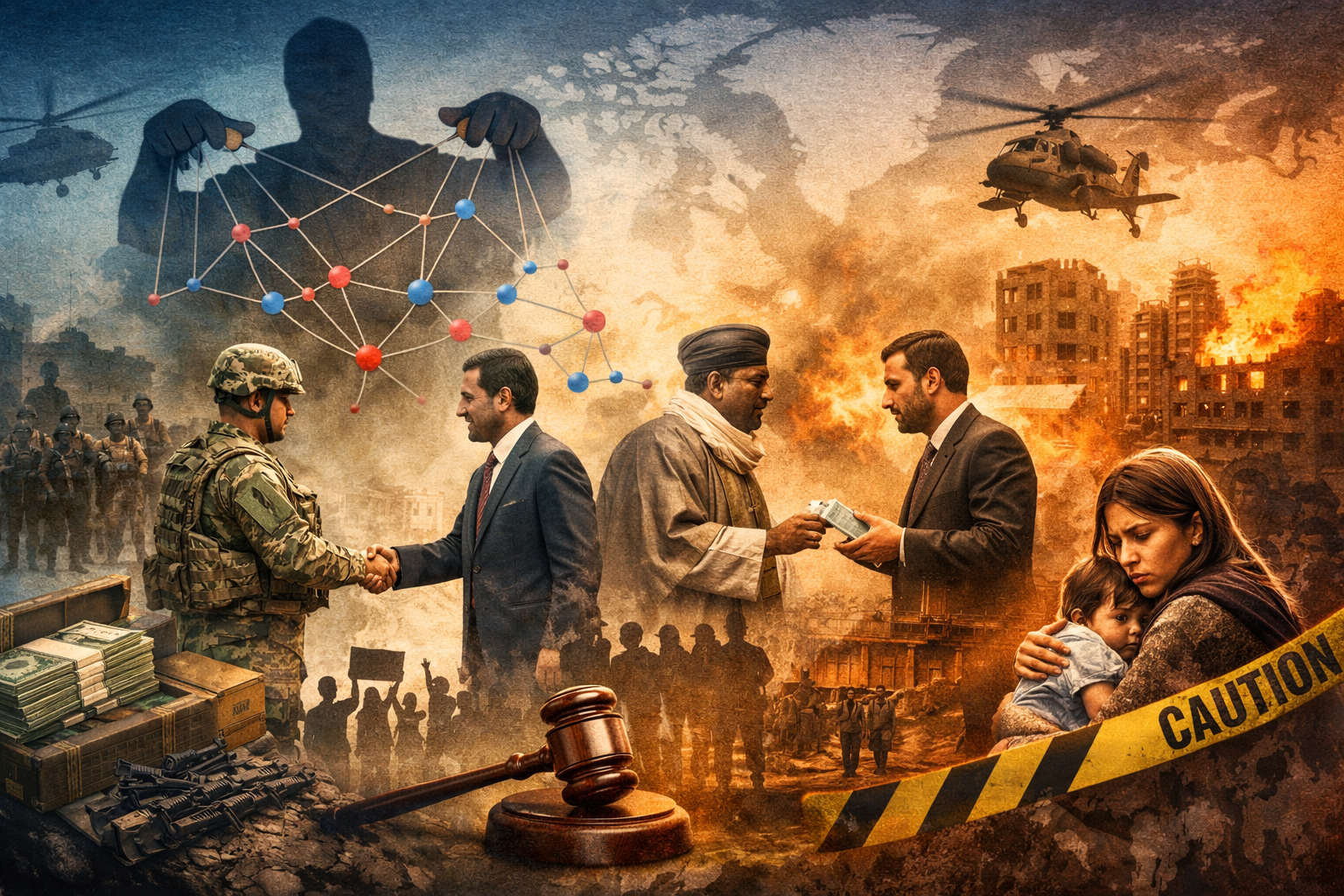
Security cooperation is often presented as a neutral process: external actors provide training, equipment, and institutional advice to strengthen partner security forces. Yet behind this technocratic framing lies a deeper reality. Security cooperation is inherently political-economic. It redistributes rents, reshapes elite bargains, and alters networks of authority. In fragile states, these shifts can produce an unexpected outcome: formal capacity increases, but legitimacy erodes.
The core problem is structural. Security institutions are not isolated bureaucracies; they are embedded within political systems defined by patronage, informal authority, and survival strategies. When external assistance enters these systems, it does not stand apart from them. It becomes absorbed into existing networks of power.
Four recurring mechanisms help explain why well-intentioned reforms so often disappoint.
First, patronage. In many fragile states, security forces function as sites of rent distribution rather than Weberian institutions. External funding, training slots, and equipment frequently flow through patron-client networks. Promotions may follow factional loyalty rather than merit. Resources meant to professionalise forces can instead consolidate elite survival strategies. The result is not neutral capacity-building but the reinforcement of existing hierarchies.
Second, veto players. Powerful actors within ministries, logistics chains, or intelligence services often control chokepoints in reform processes. These gatekeepers can block or reshape initiatives that threaten their rents. Security cooperation routed through such actors risks strengthening spoilers rather than marginalising them.
Third, deterritorialisation of authority. When foreign advisors, embedded trainers, or donor-driven reporting systems become indispensable, authority shifts into hybrid arenas. Accountability blurs. Security forces may become upwardly accountable to donors rather than downwardly accountable to citizens. Over time, this weakens sovereignty and erodes local trust.
Fourth, legitimacy. Security effectiveness depends not only on technical capability but on public perception. When assistance strengthens coercive tools without improving accountability, citizens may see reformed forces as more capable—but not more legitimate. Trust declines even as equipment and training expand.
Historical cases illustrate these dynamics. In South Vietnam, U.S.-supported administrative reforms were filtered through entrenched patronage networks. Rather than depoliticising security institutions, assistance strengthened regime survival mechanisms. In Afghanistan, massive security aid became embedded in rent-seeking systems, producing “ghost soldiers” and phantom institutions that satisfied donor metrics but hollowed out real capacity. In Mali and Nigeria, external training layered onto factionalised forces deepened internal divisions and reinforced perceptions of predation.
Across these contexts, the pattern is consistent. Capacity appears to rise on paper, yet social credibility weakens. This phenomenon—political dislocation—occurs when reforms destabilise existing bargains without building new sources of legitimacy.
The implications for policy are profound. Security cooperation cannot rely solely on technical design. It must begin with political economy mapping: identifying elite bargains, informal institutions, and veto players. Social network analysis can reveal who controls flows of promotion, procurement, and influence. Without such analysis, assistance risks unintentionally reinforcing power monopolies.
Legitimacy must become a co-equal objective alongside capability. Transparent recruitment, accountability mechanisms, and meaningful engagement with communities are not secondary add-ons; they are foundational to durable security. Training a unit that is perceived as predatory undermines long-term stability, regardless of its tactical proficiency.
Finally, external actors must recognise limits. Security cooperation cannot re-engineer domestic political systems. The realistic goal is not to impose ideal institutions but to mitigate capture, strengthen nodes of accountability, and align reforms with existing social structures.
The broader lesson is clear: security cooperation is not technical assistance—it is political intervention. Durable outcomes depend less on the volume of aid than on whether programmes align with the political and relational realities of fragile states. Capacity without legitimacy is fragile. Only when assistance strengthens both can security institutions endure.

%20(1).jpg)
.jpg)