Why the West Misreads the Russia–China Relationship
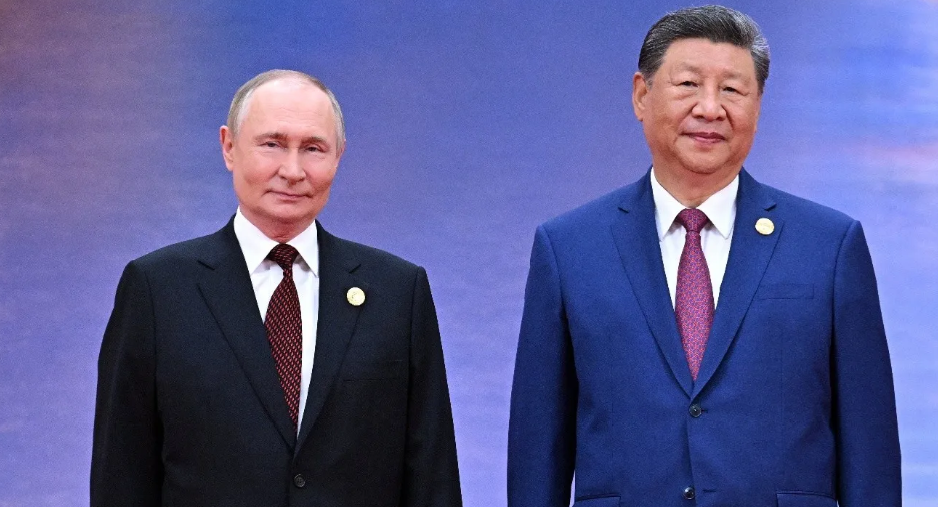
On 4 February 2022, Vladimir Putin and Xi Jinping stood side by side in Beijing and declared a partnership with “no limits.” Less than three weeks later, Russian tanks rolled into Ukraine. To much of the West, the message seemed unmistakable: two revisionist powers had aligned, and a durable authoritarian bloc was emerging.
Western policy followed accordingly. Europe’s rearmament plans cite it. U.S. strategy treats it as a fixed threat. Think tanks speak of an “authoritarian axis” as though it were a structure as stable as NATO.
This framing is wrong—and it is costing the West a strategic opportunity hiding in plain sight.
Russia and China are not allies of shared purpose. They are two predators forced into cooperation by pressure, circumstance, and a common adversary. While the hunt lasts, they move together. When it ends, they will not remain partners.
The core contradiction is simple: Russia profits from disorder; China depends on order. That tension is not theoretical. It is structural—and it is already widening.
Russia’s power flows from commodities. Oil, gas, grain, metals, fertilisers—assets that rise in value when the global system breaks down. War, sanctions, and supply shocks are windfalls for Moscow. China’s model is the opposite. Its growth depends on stable energy prices, functioning supply chains, and export markets—especially in Europe and East Asia. Disruption is poison.
That divergence was starkly exposed during the 2026 war in Iran. Energy prices surged, delivering Russia an unexpected fiscal rescue just as its war economy was straining under sanctions. China, meanwhile, watched its export markets weaken under rising energy and transport costs, compounding domestic economic fragility. The same conflict saved one partner and harmed the other.
This is not an anomaly. It is the default state of the relationship.
Strategically, the mismatch runs deeper. Russia’s existential theatre is Europe. China’s lies in the Pacific. Their most dangerous wars have no overlap. An emboldened Russia in Ukraine damages China’s reputation and threatens its trade. A Chinese confrontation over Taiwan would force Russia into a crisis it has no capacity—or interest—to manage. Cooperation exists mostly at the margins of each other’s priorities.
History worsens this picture. Russia sits on territory taken from China during the 19th century’s “Century of Humiliation,” including the land on which Vladivostok stands. Beijing does not press this claim today—but it has never renounced it. Suspicion runs thick beneath joint statements. Russian intelligence services openly distrust China. Chinese nationalist maps quietly revive pre‑Russian place names. These are not gestures of alliance; they are markers of unfinished history.
Economically, the balance of power has shifted decisively. Russia now depends on China far more than China depends on Russia. Beijing dictates terms on energy, delays critical infrastructure deals, and absorbs Moscow’s industrial base at discount prices. What is branded as partnership increasingly resembles managed dependency.
Beyond bilateral ties, China is absorbing Russia’s traditional sphere of influence—without a single shot fired. In Central Asia, Beijing is the dominant economic actor. In the Arctic, Chinese commercial ambitions collide with Russian territorial paranoia. Even where they cooperate, the relationship is transactional and brittle.
And yet Western policy continues to treat this alignment as permanent.
That is the real misreading.
Authoritarian partnerships are fragile precisely because the instincts that make these regimes dangerous to outsiders—zero‑sum thinking, paranoia, territorial ambition—make them unreliable allies to each other. The Sino‑Soviet split of the Cold War was not an accident. It was the product of structural contradictions overwhelming shared ideology.
Those contradictions are stronger today, not weaker.
Europe, in particular, has leverage it refuses to use. China depends heavily on European markets. It is sensitive to reputational cost, regulatory pressure, and fragmentation of access to advanced economies. Coordinated European engagement—especially when aligned with Indo‑Pacific partners—could raise the price for Beijing of underwriting Russia’s war without requiring confrontation with either power.
Instead, the West has chosen strategic passivity, treating the Russia–China relationship as a monolith rather than a stress fracture.
The partnership is real. It is dangerous. But it is not permanent.
And history tends to punish those who mistake convenience for loyalty.
.jpg)