Uber wil Start Autonomous Taxi in Munich in 2026
Munich is about to become a battlefield—not of traffic, but of trust.
Uber, in partnership with AI developer Autobrains and chip giant Nvidia, plans to deploy autonomous taxis in the German city as early as 2026. On paper, this is another step in the long march toward fully driverless mobility. In reality, it is a high-stakes experiment in one of Europe’s most complex urban environments.
And at the center of this experiment lies a controversial bet: fewer sensors, more intelligence.
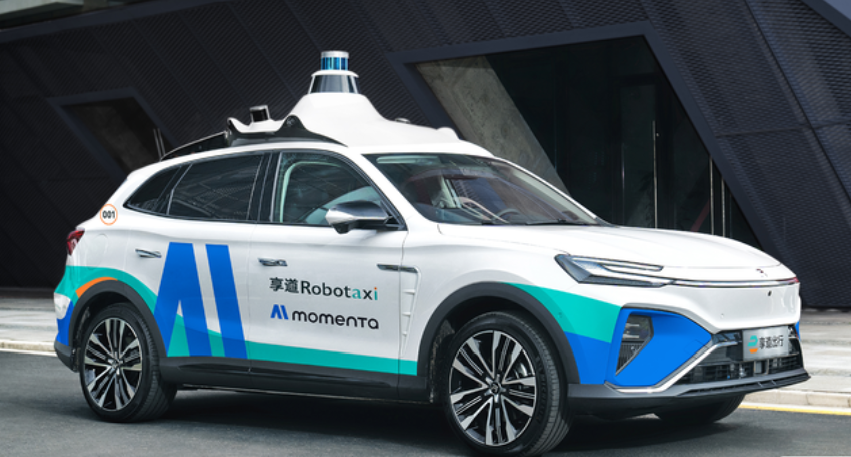
Unlike competitors such as Waymo—known for vehicles covered in expensive lidar systems—Uber’s new approach strips things down. No bulky sensor arrays. No conspicuous hardware stacks. Instead, just six cameras, aerial imagery, and what the companies describe as “agentic AI.”
The idea is deceptively simple: instead of one massive AI brain trying to solve everything, multiple smaller software agents handle specific tasks. One watches pedestrians. Another checks right-of-way rules. A third plans lane changes. Above them, a master system makes real-time driving decisions.
If this sounds familiar, it should. It mirrors microservices architectures—the same principle that powers modern digital platforms.
But this is not cloud computing. This is a two-ton vehicle moving through unpredictable human behavior.
That distinction matters.
Munich was not chosen by accident. Its dense traffic, strict regulation, and intricate road design make it a stress test for any autonomous system. Success here would signal global viability. Failure would reinforce skepticism that autonomous driving still isn’t ready for real-world chaos.
To ease that tension, Uber is introducing a psychological element—not technological.
The cars will talk.
Every move—lane changes, turns, braking decisions—will be announced to passengers in real time. The goal is transparency. If riders understand what the system is doing, they may trust it more.
It’s a subtle but powerful shift. Instead of hiding complexity behind automation, the system narrates its decisions. It turns a black box into a conversation.
And yet, the biggest risk isn’t technological—it’s historical.
Uber’s autonomous ambitions were dealt a major blow in 2018 after a fatal accident in Arizona involving one of its test vehicles. The company stepped back from in-house development, pivoting to partnerships like this one with Autobrains and Nvidia.
Now, it returns—not as a builder, but as an orchestrator.
The rollout will be cautious. For roughly the first six months, a human safety driver will sit behind the wheel, ready to intervene. Only after proving reliability will the system move toward full Level 4 autonomy—meaning no human oversight in defined zones.
Even then, limitations remain. The service will likely launch in restricted areas, such as Munich’s Mittlerer Ring. Regulatory approval is still pending. Operational details—vehicle models, exact routes—remain largely undisclosed.
But the roadmap is clear: if Munich works, expansion will follow. Up to 20 additional European cities are already in scope by 2028.
And behind all of it lies a powerful economic driver.
Drivers are expensive.
Autonomous fleets promise not only efficiency, but a fundamental shift in cost structures. Remove the human driver, and suddenly scale becomes exponential. For Uber, this is not just innovation—it’s transformation.
Yet the question remains: are people ready?
Technology may be advancing rapidly, but trust evolves slowly. The idea of stepping into a car with no driver—relying entirely on software—challenges deeply ingrained instincts.
That’s why Munich matters.
Because if autonomous taxis can navigate not just its roads, but its people—the cautious passengers, the unpredictable traffic, the strict regulators—then the future may arrive faster than expected.
But if they can’t?
Then this experiment won’t just test AI.
It will test patience.