The Rise of Thinking Swarms - SIRBAI Is Turning Groups of Drones into Coordinated Combat Systems
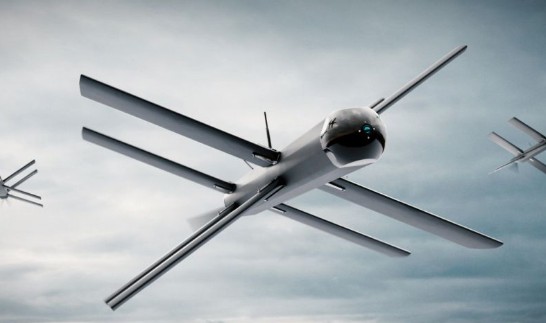
SIRBAI’s newly unveiled autonomous swarm platform suggests something very different.
Revealed at UMEX 2026, the company’s AI-powered swarm technology represents a shift from coordinated platforms to coordinated intelligence - a software-first system designed to let multiple unmanned aircraft think, decide, and adapt together inside contested environments.
Not as remote-controlled tools.
Not as pre-scripted formations.
But as a distributed, decision-making network in the sky.
From Single Platforms to Collective Intelligence
Traditional unmanned systems are optimized as individual assets.
Even when several are used together, coordination usually depends on centralized command links and preplanned behavior.
That model breaks quickly in real combat.
Jamming degrades communications.
GPS becomes unreliable.
Operators become overloaded.
Situations evolve faster than plans.
SIRBAI’s approach starts from a different premise: autonomy must live inside the swarm itself.
Each drone becomes a node in a distributed intelligence system, sharing information, contributing to mission decisions, and adjusting behavior in real time. Mission planning, task allocation, navigation, and coordination are handled through AI-driven processes rather than rigid scripts.
The result is a swarm that can continue operating even if individual links degrade or nodes are lost.
Resilience through distribution.
Software First, Battlefield Always
SIRBAI was formed by a team of more than 40 engineers specializing in AI, robotics, and autonomy, with roots in research from Abu Dhabi’s Technology Innovation Institute (TII).
That heritage matters.
Instead of building hardware first and adding autonomy later, SIRBAI built a software stack designed to sit above different airframes, sensors, and communication systems.
This abstraction layer allows the same core autonomy to scale from small tactical drones to advanced Unmanned Combat Aerial Vehicles.
It also allows faster iteration.
New behaviors can be introduced as software updates.
Algorithms can be retrained.
Capabilities can evolve without redesigning aircraft.
In modern warfare, the side that updates fastest often wins.
Operating Where GPS Does Not Exist
One of the most telling features of SIRBAI’s system is resilient navigation in GPS-denied and jammed environments.
This is no longer an edge case.
Electronic warfare has become the norm.
Navigation that depends on clean satellite signals is fragile.
SIRBAI’s platform integrates alternative navigation techniques and sensor fusion to maintain positioning and coordination when GPS is unavailable. Combined with distributed decision-making, this allows swarms to keep functioning inside heavily contested electromagnetic environments.
In practical terms, this means missions do not collapse the moment GPS goes dark.
That alone elevates the platform from experimental to operational.
Reducing Human Burden Without Removing Humans
Autonomy does not mean eliminating operators.
It means changing what operators do.
Instead of micromanaging individual drones, users interact at the mission level.
Define objectives.
Set constraints.
Monitor progress.
Intervene when needed.
SIRBAI describes this as bridging the gap between human intent and autonomous mission execution.
Operators remain in the loop.
The swarm handles the details.
This shift is essential as swarms grow larger. No human team can manually coordinate dozens or hundreds of vehicles in real time.
Only machines can manage machine-scale complexity.
Why This Matters Strategically
Swarm autonomy changes the economics of air power.
Instead of relying solely on a small number of exquisite platforms, forces can deploy many lower-cost assets that collaborate.
This enables:
- Persistent surveillance over wide areas
- Saturation of defenses
- Rapid search and targeting
- Cooperative electronic warfare
- Manned-unmanned teaming
It also complicates adversary planning.
Which drone is the leader?
Which one carries the sensor?
Which one carries the payload?
In a true swarm, those roles can shift dynamically.
A Regional First with Global Implications
SIRBAI’s launch is reportedly the first Middle East unveiling of this class of AI-powered swarm system.
That signals something important.
Advanced autonomy is no longer confined to a handful of traditional defense powerhouses.
Innovation centers are diversifying.
Software-first defense companies are emerging globally.
The competitive landscape is broadening.
The Bigger Picture
SIRBAI’s platform reflects a deeper transition in military technology.
The future is not defined by single platforms.
It is defined by networks of intelligent machines.
Autonomy is becoming collective.
Decision-making is becoming distributed.
Control is becoming higher-level and intent-driven.
Swarms will not replace every system.
But they will redefine how mass, resilience, and adaptability are achieved.
The era of the lone drone is fading.
The era of thinking swarms has begun.
.png)