The Myth of the “Peaceful Power”. How Military History Shapes Modern Perceptions of Russia
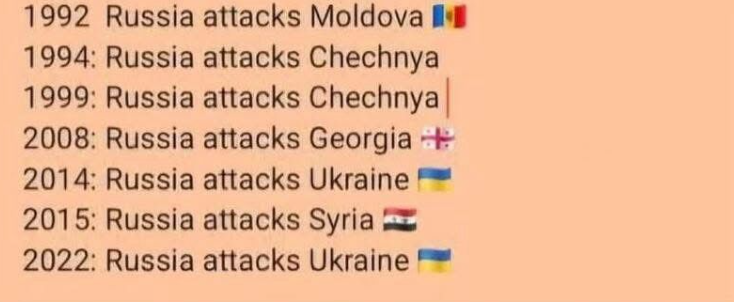
Few countries describe themselves as defenders of stability as often as Russia.
At the same time, few major powers have generated as much debate about the role of military force in their foreign policy. The contrast highlights a broader question that extends beyond Russia itself: how should nations be judged, by their official narratives or by their historical actions?
The discussion is particularly relevant today because history continues to influence how governments, military planners, and societies interpret current events.
Russia's military history is extensive and complex. Over centuries, Russian states, including the Tsardom of Russia, the Russian Empire, the Soviet Union, and the modern Russian Federation, participated in numerous military campaigns, conflicts, and territorial expansions across Europe, the Caucasus, Central Asia, and beyond. Historical records document a long series of wars involving Russia and its predecessors over many centuries.
Supporters of Russian foreign policy often argue that many of these military actions were driven by security concerns, buffer-zone requirements, or responses to perceived external threats. Critics counter that expansion and influence over neighboring territories have been recurring themes throughout different political eras, regardless of whether the governing system was imperial, communist, or post-Soviet.
The debate is hardly new.
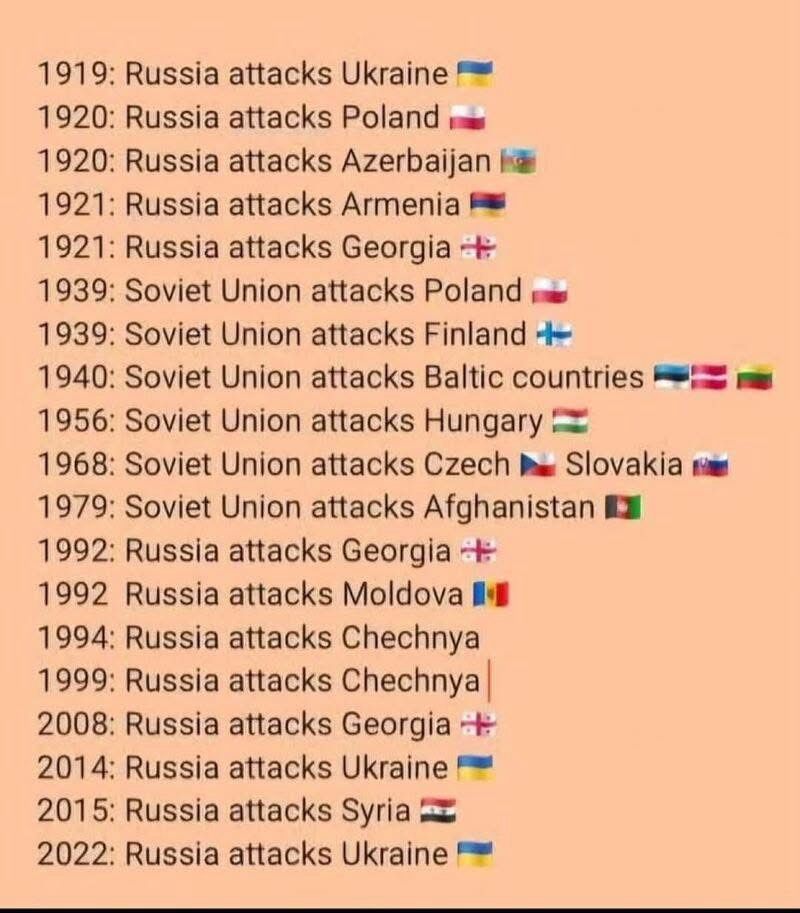
Great powers throughout history have frequently justified military intervention through narratives of security, stability, protection, or historical responsibility. Russia is not unique in that regard. What makes the Russian case particularly interesting is the continuity that many analysts identify across dramatically different political systems.
The Russian Empire sought influence across vast areas of Eurasia.
The Soviet Union maintained control over an extensive geopolitical sphere while conducting interventions beyond its borders. Historical studies document multiple Soviet military interventions in neighboring and foreign states.
Since the collapse of the Soviet Union, Russia has continued to use military force abroad in a number of conflicts and interventions. A RAND study identified 25 Russian military interventions since 1991 and argues that Moscow often acts when it perceives threats to its regional influence or strategic interests.
This history helps explain why contemporary events generate such strong reactions internationally.
When policymakers assess current security developments, they rarely consider them in isolation. Instead, they interpret them against broader historical patterns. Past actions create expectations about future behavior.
That phenomenon affects every major power.
For Russia, however, the issue is especially significant because historical memory plays a central role in both domestic and international political narratives. Competing interpretations of history influence debates about borders, sovereignty, alliances, spheres of influence, and security guarantees.
The result is a persistent disagreement about how to understand Russia's role in the world.
Some analysts view modern Russia primarily through the lens of national security interests shared by many states.
Others emphasize a historical pattern of intervention and regional dominance that transcends individual leaders and political systems.
Neither perspective exists in a vacuum.
Both are shaped by decades, and in some cases centuries, of historical experience.
This raises an important question for policymakers.
Is long-term behavior determined primarily by leaders, institutions, geography, culture, or strategic incentives?
The answer matters because it influences how governments design security policies, military alliances, and diplomatic strategies.
In Europe, these questions have become increasingly urgent. Security planning today is influenced not only by current events but also by interpretations of historical precedent. Understanding the past has become part of preparing for the future.
Ultimately, the debate is not simply about Russia.
It is about how nations construct narratives about themselves, how military history shapes international reputation, and how historical experience affects trust between states.
Countries may describe themselves in many ways.
History, however, often remains the standard against which those descriptions are measured.