The Apache’s New Wingman Has No Pilot and Carries Enough Firepower to Change the Fight
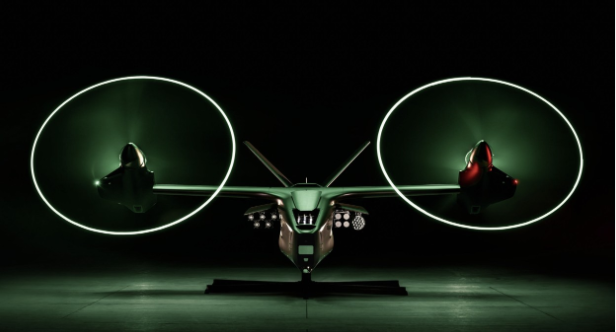
The future of attack aviation may still include helicopters—but fewer pilots may need to fly directly into the most dangerous airspace.
Anduril Industries has unveiled Thunder, a Group 5 autonomous attack rotorcraft designed to operate alongside crewed attack and assault aircraft. Developed as a defence-specific variant of a dual-use platform created with Archer Aviation, Thunder combines tiltrotor performance, hybrid-electric propulsion, modular payload bays and formation-based autonomy.
Its mission is clear: extend the reach, firepower and survivability of existing aviation units without putting more crews at risk.
That ambition reflects a major change on the battlefield.
Low-cost drones, loitering munitions, portable air-defence systems and persistent intelligence, surveillance and reconnaissance have made low-altitude operations increasingly dangerous. Traditional attack helicopters remain powerful, but they are now forced to operate inside an environment where threats can detect, track and engage them from multiple directions.
Anduril describes this environment as a robotic kill zone.
Thunder is intended to help crewed aircraft fight through it.
The aircraft uses a tiltrotor configuration, allowing vertical takeoff and landing while also transitioning to efficient wingborne flight. This gives it the ability to operate without a runway while travelling farther and faster than traditional rotorcraft.
A series hybrid-electric powertrain is designed to provide extended range and endurance. Its optimum-speed tiltrotors can vary rotor speed during different phases of flight, improving efficiency, reducing fuel use and lowering acoustic signature during low-altitude operations.
Thunder is also designed for flexible deployment. It may be capable of long-range self-deployment, while the aircraft can alternatively be packed into a standard shipping container for transport by air, road, rail or sea.
However, its most provocative feature is not range.
It is mass.
Thunder is being developed as a modular weapons and payload carrier capable of entering heavily defended areas ahead of or alongside crewed aircraft. Depending on the mission, it could operate as a missile carrier, launched-effects mothership, maritime patrol platform, electronic-warfare aircraft or contested logistics vehicle.
Its internal main payload bay can reportedly be configured with ten air-to-ground missiles, sixteen launched effects or seventy-six 70-millimetre rockets. A separate nose module can carry twelve additional counter-UAS effectors.
That allows one aircraft to carry a diverse mix of weapons and mission systems in a single sortie.
The concept becomes even more significant when several Thunder aircraft operate with one crewed helicopter.
Anduril argues that pairing three Thunder aircraft with each Apache could triple the available munitions of a combat aviation brigade without adding more pilots to the formation. In theory, this would allow commanders to attack more targets, absorb greater risk and sustain combat operations for longer.
The human crew would remain responsible for the most important decisions, while the autonomous aircraft handles navigation, formation movement, route timing, separation and mission tasks.
This is where Anduril’s Lattice software becomes central.
Thunder is not intended to be manually flown like a remote-controlled drone. Lattice for Mission Autonomy translates operator intent into machine-speed actions. It manages formation behaviour, deconfliction and coordination between autonomous and crewed aircraft.
Thunder is also being designed for degraded environments.
Its sensor package combines computer vision, onboard processing, map data, passive sensors and selective active sensing. These systems are intended to help it identify terrain, obstacles and threats even when GPS, communications or visibility are disrupted.
That capability will be critical.
High-speed flight close to the ground is already demanding for experienced pilots. Performing the same mission autonomously while avoiding terrain, enemy threats and friendly aircraft will require an exceptionally reliable perception and control system.
Thunder also faces broader questions.
How much authority will autonomous aircraft receive in lethal missions? How will crews verify target information? How resilient will the aircraft be against electronic warfare, cyberattacks and deception? And can it truly be produced cheaply enough to deliver the mass Anduril promises?
Those questions will define whether Thunder becomes a transformational system or simply an ambitious prototype.
Anduril has already completed multiple test flights with full-scale surrogate aircraft, while Thunder’s first flight is planned for 2027.
The aircraft is not yet operational, but the logic behind it is difficult to ignore.
Attack aviation can no longer rely only on a small number of expensive crewed platforms. The battlefield is becoming too transparent, too contested and too saturated with inexpensive threats.
Thunder represents a different answer: send autonomous firepower forward, keep human crews farther back and turn each crewed helicopter into the centre of a larger robotic formation.
The next revolution in attack aviation may not replace the Apache.
It may surround it.

.jpg)