Starship Dreams vs. Space Reality - Why Orbital AI Data Centers May Fail Before They Scale
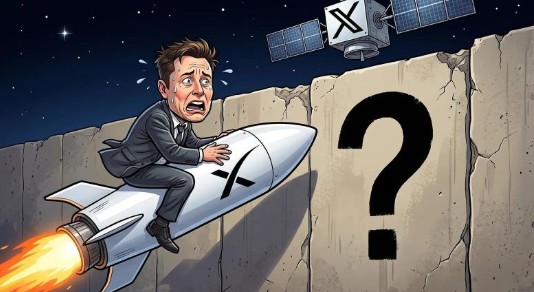
The vision of orbital data centers has long captured the imagination of technologists and investors alike. The idea is simple yet powerful: move computing infrastructure into space, where energy is abundant, latency could be optimized globally, and Earth-bound constraints are reduced. Few have championed this vision more aggressively than SpaceX and its founder Elon Musk. But a recently leaked SEC filing reveals a stark contrast between public ambition and internal assessment.
According to the filing, SpaceX itself considers its plans for space-based AI infrastructure to be economically high-risk. This is not merely a cautious disclaimer—it reflects fundamental challenges rooted in physics, engineering, and economics. In orbit, hardware is exposed to extreme conditions that are difficult to mitigate. High-energy radiation continuously bombards electronic components, degrading semiconductors and increasing failure rates. Unlike terrestrial data centers, where hardware lifespans are measured in years, orbital systems may degrade far more rapidly.
Temperature variability adds another layer of complexity. Satellites in low Earth orbit experience rapid transitions between intense solar heat and the cold darkness of space. These thermal cycles can cause expansion and contraction in materials, leading to mechanical stress and eventual system failure. Maintaining stable operating conditions for sensitive AI hardware under such circumstances is both technically challenging and costly.
These realities have direct economic implications. If hardware must be replaced frequently, the cost advantage of orbital computing diminishes quickly. Each replacement requires manufacturing, launch, and deployment—processes that remain expensive despite advances in reusable rocket technology. The result is a model where operational costs could outweigh the perceived benefits, especially when compared to increasingly efficient ground-based data centers.
Environmental concerns further complicate the equation. As satellites reach the end of their operational life, they are typically deorbited and burn up in the atmosphere. While this has been standard practice for decades, the scale envisioned for orbital computing infrastructure introduces new risks. A continuous cycle of launching and deorbiting large numbers of satellites could release significant quantities of metallic particles and nitrogen oxides into the upper atmosphere. Scientists are only beginning to study the potential impact of these emissions on the ozone layer and climate systems.
Despite these challenges, SpaceX continues to promote the concept of orbital server farms as a transformative solution. This apparent contradiction is not accidental—it is strategic. The company’s broader business model, particularly the development of its next-generation rocket system Starship, depends heavily on creating demand for large-scale space infrastructure. Orbital data centers represent one of the few use cases capable of fully utilizing Starship’s massive payload capacity.
This creates a tension between vision and viability. On one hand, SpaceX must inspire confidence and attract investment by presenting a compelling future for space-based industries. On the other hand, regulatory requirements—especially in the context of a potential IPO—force the company to disclose risks in detail. U.S. securities law leaves little room for ambiguity; companies must clearly outline potential downsides to protect themselves from legal liability.
As a result, ambitious concepts like orbital AI data centers are carefully framed. Publicly, they are positioned as transformative innovations. Legally, they are often described as forward-looking statements or personal views, rather than guaranteed business outcomes. This dual narrative reflects the realities of operating at the frontier of technology and finance.
The situation also highlights broader limits in the current phase of space industrialization. While launch costs have decreased and access to orbit has expanded, the environment itself remains unforgiving. Unlike digital platforms, which can scale rapidly with relatively low marginal costs, space-based systems must contend with physical degradation, logistical complexity, and environmental constraints.
Ultimately, the promise of decentralized AI infrastructure in space is not invalid—but it is far from assured. Significant breakthroughs in radiation-hardened electronics, thermal management, and sustainable satellite design will be required to make the concept economically viable. Until then, the gap between vision and reality will remain substantial.
The leaked filing serves as a reminder that even the most ambitious technological dreams must contend with hard limits. In the case of orbital computing, those limits are not just financial or regulatory—they are written into the fabric of space itself.