LUCAS from SpektreWorks - The Kamikaze Drone Built by a 15-Person Startup That Reached Combat in 7 Months
Modern warfare is increasingly defined by speed—not just on the battlefield, but in how quickly technology moves from prototype to combat.
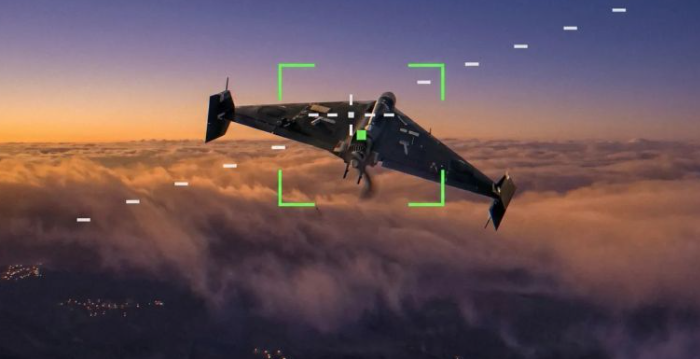
Few examples illustrate this transformation better than the LUCAS one-way attack drone built by SpektreWorks.
In February 2026, the platform reportedly entered operational use during Operation Epic Fury, marking what analysts consider the first confirmed combat deployment of an American kamikaze drone developed by a startup.
The most surprising part of the story is not the drone itself.
It is the company behind it.
At the time the platform entered combat, SpektreWorks had roughly fifteen employees.
From Obscurity to Combat
Until recently, almost nobody outside niche defense circles had heard of SpektreWorks.
Founded in Scottsdale, Arizona, by Daniel Laks, Brad Golding and Jeremy Wagoner, the company initially operated as a small engineering consultancy focused on commercial UAV systems.
Laks himself did not come from a typical startup background.
Before founding the company, he spent seven years at Orbital Sciences, working on guidance, navigation and control systems for spacecraft—highly specialized engineering that involves keeping vehicles stable under extreme conditions.
In 2015 he briefly worked at 3D Robotics, one of the early open-source drone companies that eventually lost the commercial drone race to DJI.
SpektreWorks itself remained largely invisible for years.
The company described its work simply as engineering services for unmanned aerial systems.
Then the geopolitical environment changed.
Ukraine and the Demand Signal
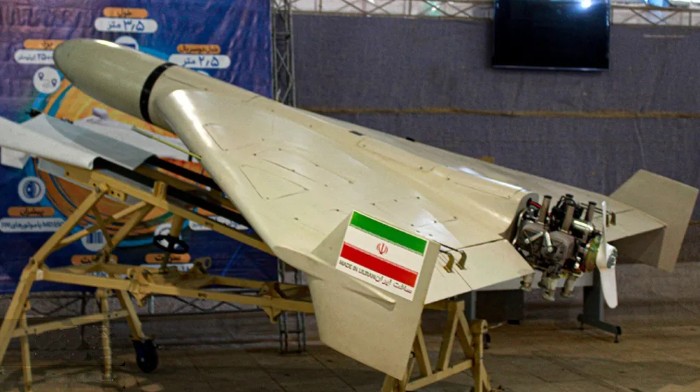
When Russia began deploying Iranian Shahed-136 loitering munitions at scale in Ukraine in 2022, it exposed a critical gap in the U.S. defense ecosystem.
American air defense units needed realistic training targets that behaved like the Shahed drones they were expected to counter.
There were almost none.
SpektreWorks saw the opportunity.
Using its autopilot expertise and composite airframe capabilities, the company developed a Shahed-like drone called FLM-136, marketed as a threat emulation system.
The product generated modest revenue—about $2 million annually by 2025—but it had one critical advantage:
It already existed and it flew.
That mattered more than scale.
Enter LUCAS
The FLM-136 eventually evolved into a weaponized version known as LUCAS.
In July 2025, the drone was publicly displayed in the Pentagon courtyard during an announcement by U.S. defense leadership outlining a directive to accelerate drone development and procurement.
Eight days later, SpektreWorks received a $30 million contract through the APFIT program.
APFIT—Accelerate the Procurement and Fielding of Innovative Technologies—is designed specifically to shorten the time between prototype and operational deployment.
Instead of waiting years for traditional procurement cycles, the program pushes promising technologies directly into field testing.
Within seven months, LUCAS reportedly reached operational use.
The Startup Advantage
The speed of this transition highlights a growing trend in defense innovation.
Traditional defense contractors often require years to develop and certify new platforms.
Startups, by contrast, can move faster because they operate with smaller teams, simpler structures and fewer bureaucratic layers.
SpektreWorks demonstrated this dynamic clearly.
The company’s hiring data shows a team assembling airframes, avionics, payload systems and ground control equipment within a small multidisciplinary workforce.
For a startup, this level of flexibility can dramatically accelerate development cycles.
However, it also introduces challenges.
Scaling production, managing government contracts and building reliable supply chains require operational infrastructure that many startups initially lack.
A Crowded Market Ahead
SpektreWorks is not alone in the emerging market for loitering munitions.
Several other companies are developing similar systems, including established aerospace manufacturers and defense innovation programs such as Project Artemis.
The U.S. Department of Defense has also made it clear that it intends to avoid relying on a single supplier, instead encouraging multiple manufacturers to produce large quantities of low-cost drones.
This means that the long-term market for systems like LUCAS may become highly competitive and potentially commoditized.
The real value may lie not in the airframes themselves but in software, autonomy and swarm coordination technologies.
The Meaning of “Combat Proven”
Despite these challenges, SpektreWorks currently holds a unique advantage.
The LUCAS drone is combat proven.
In defense procurement, that label carries enormous weight.
Systems that have already been used in operational environments reduce risk for program managers deciding which technologies to adopt.
However, that advantage may only last 12 to 18 months before competitors field their own operational platforms.
The real question is whether SpektreWorks can scale quickly enough to turn its early success into a lasting position within the defense industrial base.
If it does, the company could become a powerful example of how small, fast-moving startups are reshaping the future of military technology.
If not, it may still be remembered as something equally important:
The moment when the defense procurement system began to change.