German Drone Industry 2026 (Volocopter & Lilium) : Are We Ready for the Age of Certified Air Mobility?
For years, Europe’s drone sector has been talking about potential. Regulations. Test projects. Pilot programs. But what if 2026 marks the year this potential actually becomes real?
The question is no longer whether drones can operate commercially — it’s whether our laws, infrastructure, and security frameworks can keep up with them.
Two developments are shaking the industry: full harmonization of UK and EU drone regulations, and the first European test flights of certified eVTOL air taxis. Both signal a seismic shift: drones are no longer experimental toys or niche gadgets. They are entering critical, standardized operations.
Since January 1, 2026, the UK requires all drones to carry UK0–UK6 classifications, aligned with the EU’s C0–C6 system. That means drones in the UK now follow exactly the same rules as the EU — a unified market for professional, high-performance drones. But here’s the kicker: the highest classes, UK5 and UK6 (C5/C6 in the EU), allow operations beyond visual line of sight and over populated areas. Suddenly, drones that were once restricted to small test areas can now enter cities and critical airspace — legally.
Add Remote ID to the mix, which continuously broadcasts a drone’s location and identity, and you have the backbone for truly integrated, large-scale operations. But are operators ready for the hidden challenge? Cybersecurity risks lurk in every connected drone — from spoofed Remote ID signals to hijacked flight controls. 2026 is the year when compliance isn’t optional. It’s mission-critical.
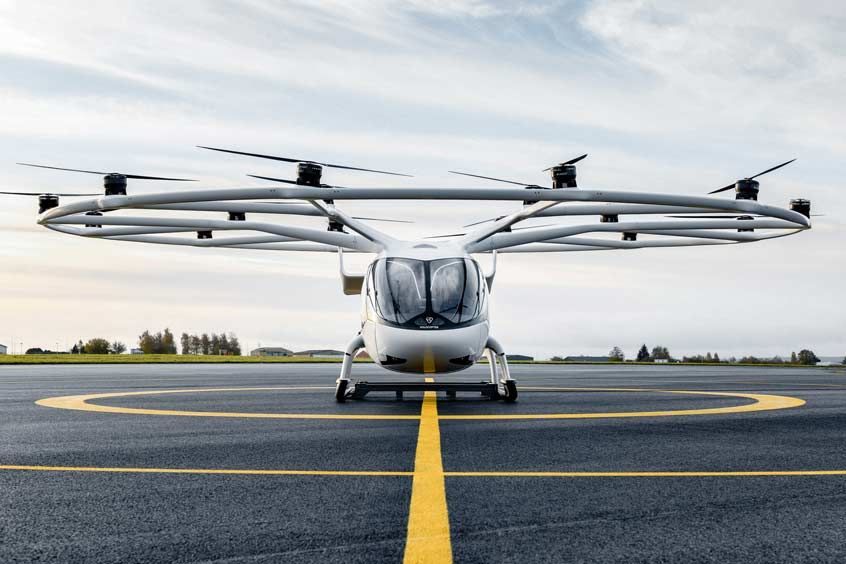
Meanwhile, Germany’s Volocopter is taking the next step. Its VoloCity and VoloXPro eVTOLs are flying in the first European “sandbox” for certified urban air mobility. These aren’t just demonstrations; they are full-scale trials under near-commercial conditions, including emergency response operations in partnership with ADAC Luftrettung. The message is clear: the future of urban air taxis is not theoretical anymore — it’s being tested, validated, and prepared for market entry in 2027.
And it’s not just operators or manufacturers who are evolving. Infrastructure is catching up. Belgium launched its National Airspace Security Center (NASC) on January 1, 2026, integrating civil and military airspace data to detect and neutralize unauthorized drones. Without such systems, ambitious operations like organ transport or urban infrastructure monitoring would remain too risky to attempt.
So here’s the question the industry must confront: Are we building drones — or are we building an entire ecosystem for critical air mobility?
Companies now face a stark choice. Ignore cybersecurity and regulatory compliance, and your drone operations could be grounded or legally challenged. Embrace them, and you gain a competitive edge: certified C5/C6 or UK5/UK6 drones, robust Remote ID integration, and adherence to emerging “Trusted Drone” EU standards can become a market differentiator — not just a compliance checkbox.
2026 is the year the European drone market stops experimenting and starts operating at scale. It’s a year when certified drones, secure communication, cross-border harmonization, and robust testing infrastructure converge to create a new reality for urban mobility and critical operations.
The real question now isn’t whether drones can fly safely — it’s whether we, as regulators, operators, and innovators, are ready to trust them with our skies.
The future is here. But are we ready to reach it?

.jpg)