From Gimbals to Global Ambition: Gremsy’s Bet on Becoming a Hardware Unicorn
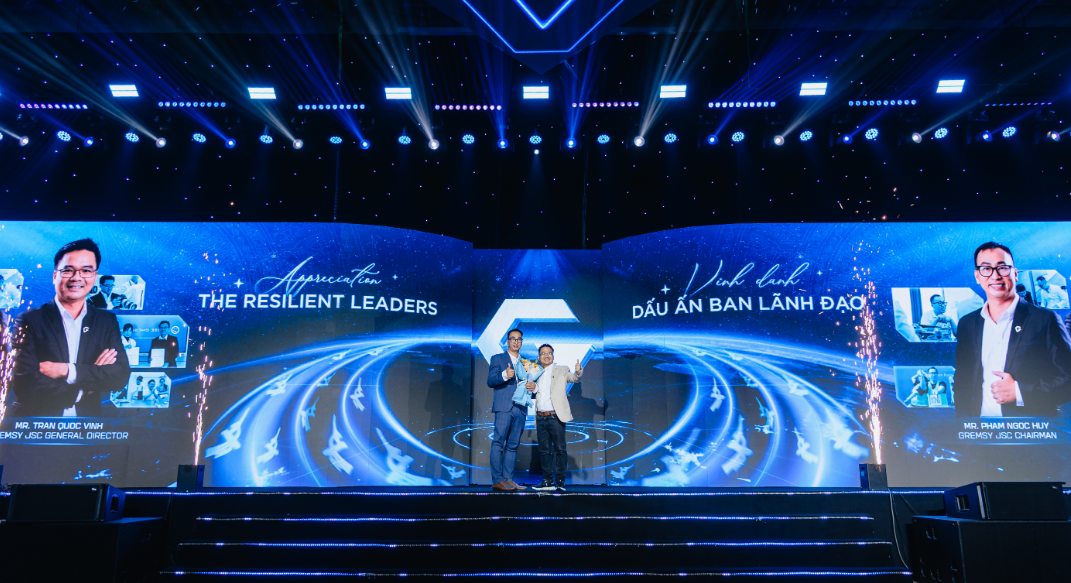
For most hardware companies, reaching their fifteenth anniversary is a moment for reflection. For Gremsy, it is a launchpad.
The Vietnam‑based technology company, best known for its stabilization systems and payload solutions for unmanned platforms, has used the milestone to clearly state its ambition: becoming a Hardware Technology Unicorn by 2030. In an industry dominated by software narratives and platform giants, Gremsy is making a bold claim—that high‑performance hardware, if scaled correctly, can still lead the next wave of autonomous innovation.
The shift is not subtle. After more than a decade of steady growth, Gremsy is moving decisively toward accelerated global expansion. The language has changed from optimization to scale, from components to ecosystems. The company is no longer content with being a best‑in‑class supplier. It wants to become infrastructure.
At the center of this strategy lies a simple but demanding idea: autonomy does not belong to a single domain.
Gremsy built its reputation in the UAV space, developing image stabilization and sensing solutions trusted across commercial and industrial drone markets. But the company now sees the boundary between air, land, and sea as increasingly artificial. Autonomous missions rarely remain confined to one environment. Surveillance, inspection, disaster response, and security workflows are multi‑domain by nature—and hardware needs to follow.
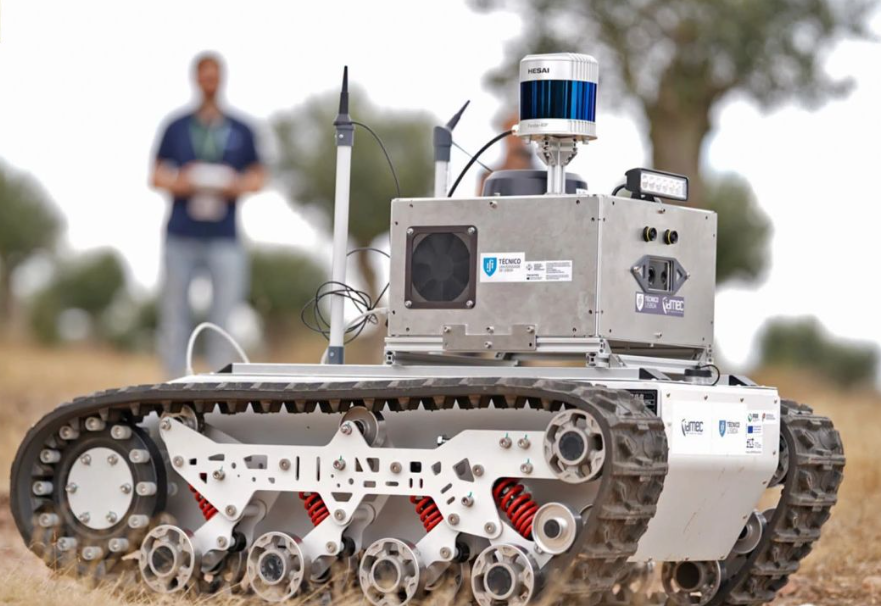
That insight is driving Gremsy’s expansion beyond aerial platforms into ground robotics and maritime systems, including surface and underwater vehicles. The goal is to deliver stabilization and payload solutions that operate coherently across air, land, and sea—an integrated hardware ecosystem built for real‑world operational complexity.
This is where Gremsy’s strategy breaks from many competitors.
Rather than chasing standalone products, the company is doubling down on system integration and end‑to‑end solutions. Research and development remains central, but the emphasis is shifting toward making sophisticated hardware deployable at scale. In practical terms, that means moving from precision engineering alone to manufacturability, resilience, and interoperability.
Hardware unicorns are rare for a reason. Scaling production while maintaining performance margins is unforgiving. Gremsy appears to understand this. As part of its long‑term plan, the company is investing in next‑generation manufacturing capabilities, including a new camera module production facility. This is not just about capacity. It is about supply‑chain control, consistency, and the ability to serve global markets without bottlenecks.
The context matters. Gremsy emerged from Saigon Hi‑Tech Park, an ecosystem designed to translate engineering talent into global competitiveness. Local policymakers see the company as proof that Vietnam’s high‑tech ambitions can extend beyond outsourcing and assembly into original, export‑ready technology. That narrative aligns neatly with Gremsy’s own evolution—from specialist vendor to platform enabler.
What makes the 2030 unicorn target credible is not optimism, but positioning.
Autonomous systems are no longer niche. Governments, industries, and infrastructure operators are converging on autonomy as a solution to labor shortages, operational risk, and scale constraints. Sensors and stabilization—areas Gremsy has mastered—are quietly becoming mission‑critical across defense, logistics, energy, and public safety.
And unlike software, hardware creates lock‑in through physics.
Once embedded into platforms and certified across domains, high‑performance hardware becomes difficult to replace. That stickiness is valuable—and it compounds when systems are deployed at fleet scale.
Gremsy’s challenge is execution. Expanding across domains while maintaining focus is notoriously difficult. Scaling manufacturing without eroding technological differentiation is harder still. But the roadmap is clear, and the ambition is explicit.
In a technology landscape dominated by code, Gremsy is making a contrarian bet—that hardware, integrated intelligently and deployed globally, still has the power to define the future.
By 2030, the company hopes to prove that unicorns don’t have to be made of software alone.
%20(1).png)
.jpg)