Flying with a Digital Wingman - The YFQ-42A Marks a New Phase in Autonomous Combat Aviation

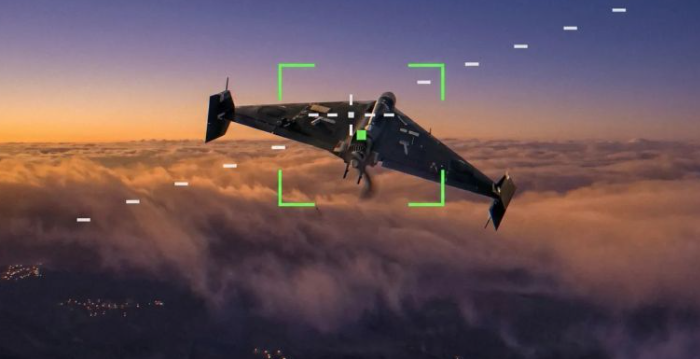
Uncrewed combat aircraft are moving steadily from concept to operational reality, and autonomy is becoming central to how future air missions will be executed. This month, General Atomics Aeronautical Systems reached a significant milestone with the successful completion of the first semi-autonomous combat mission of its YFQ-42A platform, signaling real progress toward the next generation of Collaborative Combat Aircraft, or CCA.
The YFQ-42A conducted a mission lasting more than four hours, executing combat-relevant tasks under semi-autonomous control. During the flight, the platform received mission commands from a ground control station and carried them out with a high degree of precision. The demonstration marks a shift from tightly scripted autonomy tests toward longer, more operationally realistic mission profiles.
At the core of the milestone is the integration of third-party autonomy software into the aircraft’s mission system. The YFQ-42A incorporated mission autonomy software that enabled real-time decision execution while maintaining a human operator in the loop. Once autonomy mode was activated from the ground console, operators transmitted task-level commands rather than continuous flight inputs, allowing the aircraft to manage execution dynamically throughout the mission.
This approach reflects how future air combat operations are expected to unfold. Rather than replacing human decision-makers, autonomous systems are designed to absorb workload, manage complexity and extend operational reach. The result is a collaborative relationship between crewed and uncrewed platforms, where autonomy enhances speed, endurance and survivability.
The YFQ-42A program has progressed rapidly. Development began in mid-2025, followed by initial prototype flights and demonstrations of automated takeoff and landing. The latest mission builds on that foundation, showing that semi-autonomous control can be sustained over extended durations and across multiple phases of flight.
This progress aligns with broader operational concepts that envision mixed formations of crewed fighters and uncrewed aircraft operating together. In such scenarios, uncrewed systems can be tasked with sensing, screening, electronic support or strike missions, allowing piloted aircraft to focus on command, coordination and complex decision-making while reducing pilot exposure in contested environments.
A key enabler of this flexibility is architecture. The YFQ-42A is built around a modular design philosophy derived from General Atomics’ Gambit series. A common airframe can be adapted to different mission sets, from advanced sensing to air-to-air operations, without requiring entirely new designs. Modular mission systems also simplify the integration of new autonomy software as capabilities mature.
This design approach reduces development timelines and costs while enabling faster iteration. Rather than waiting for fully bespoke platforms, armed forces can evolve uncrewed combat capabilities incrementally, integrating new sensors, autonomy features and mission software as operational needs change.
The implications extend beyond a single aircraft. As autonomy becomes more capable, interoperability between systems will be critical. Open architectures and standardized interfaces allow mission autonomy software, sensors and control systems to communicate seamlessly, enabling complex, multi-domain operations.
The YFQ-42A’s successful semi-autonomous mission suggests that these building blocks are beginning to come together. The aircraft demonstrated not only endurance, but the reliability and predictability required for trust in autonomous systems. That trust will be essential if uncrewed platforms are to operate alongside crewed aircraft in high-risk environments.
Autonomous combat aviation is no longer a distant vision. With milestones like this, it is becoming an operational discipline defined by collaboration rather than replacement. The YFQ-42A shows that the future of air combat may not be fully autonomous, but it will almost certainly be shared.
.jpg)