Europe’s Silent Sentinels: How Kelluu Is Turning the Sky into Critical Infrastructure
For decades, airships were a punchline—romantic leftovers of a forgotten era, floating somewhere between nostalgia and novelty. In 2026, they are back. Not as advertising balloons or tourist attractions, but as Europe’s newest piece of strategic infrastructure.
Kelluu’s €15 million Series A round, led by the NATO Innovation Fund, is not just another funding announcement in the crowded defence-tech space. It signals something more consequential: Europe is relearning how to think long-term about security, resilience, and technological sovereignty—starting in the airspace between satellites and drones.
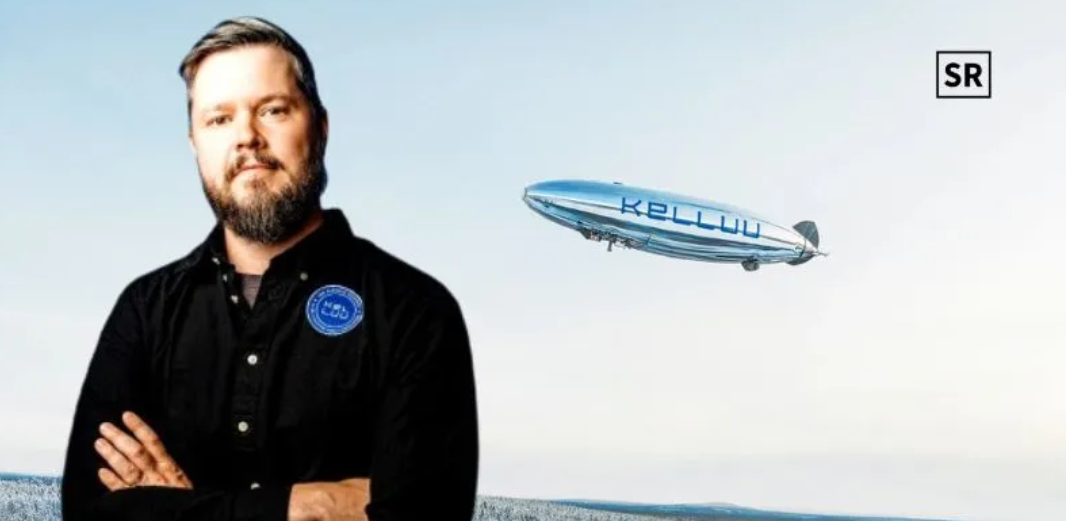
From Finland’s Arctic edge, Kelluu has built the world’s largest fleet of autonomous airships. Not loud, not fast, not aggressive—just always there. Quiet, hydrogen-powered, and persistent. In an age obsessed with speed and shock, Kelluu bets on endurance.
And endurance is exactly what modern security lacks.
Satellites promise global coverage but revisit too slowly and too expensively. Drones offer precision but run out of battery, permissions, or political tolerance. Kelluu’s airships hover in between: below cloud level, above terrain, operating for hours across thousands of square kilometres, collecting high-resolution data in real time.
This is not science fiction. NATO has already tested it.
Through two phases of NATO’s DIANA accelerator, Kelluu graduated from promising startup to operational technology. The message from Brussels and allied capitals was clear: Europe needs persistent aerial intelligence—not just for warfighting, but for border security, infrastructure protection, environmental monitoring, and crisis response.
That NATO’s own venture fund led the round—its first investment in a Finnish company—matters. It marks a shift away from fragmented pilots and toward platforms that can scale across alliance members.
What makes Kelluu especially interesting is that it never chose between defence and civilian use. It chose both.
The same airships that support ISR missions also monitor forests, detect wildfires, map cities, and protect power grids. They feed data into high‑resolution digital twins. They produce the raw material for what the company calls “large reality models”—AI systems trained not on text or images, but on the physical world itself.
This dual‑use DNA is no accident. It is Europe’s advantage.
Unlike Silicon Valley, where defence and civilian tech often live in separate moral universes, Europe designs under constraint. Climate targets, regulatory pressure, and social scrutiny force companies to justify usefulness beyond the battlefield. Hydrogen propulsion, low noise, and long endurance are not marketing slogans—they are survival requirements.
Kelluu’s platforms reflect that reality: emissions-light, infrastructure-friendly, designed to stay up without escalating tension. No sonic booms. No visible threat posture. Just data—continuous, reliable, and hard to replace.
There is also a deeper geopolitical story unfolding above Finland’s forests.
As Europe recalibrates its security posture, persistent awareness becomes as critical as firepower. Deterrence no longer starts at the border; it starts with knowledge. Who is there, what is moving, and when something changes. Kelluu’s airships don’t respond to events—they observe them long before they become incidents.
This is the opposite of reactive defence. It is preventative infrastructure.
And infrastructure is where Europe excels—when it finally decides to build.
€15 million will not change the world overnight. But it will scale fleets, mature AI models, and move Kelluu from edge-case innovation to backbone technology. More importantly, it shows that European defence tech no longer has to choose between values and viability.
The sky above Europe is becoming smarter, quieter, and more permanent.
And this time, Europe is building it for itself.