DJI Challenges FCC Covered List Decision in High-Stakes Legal Battle
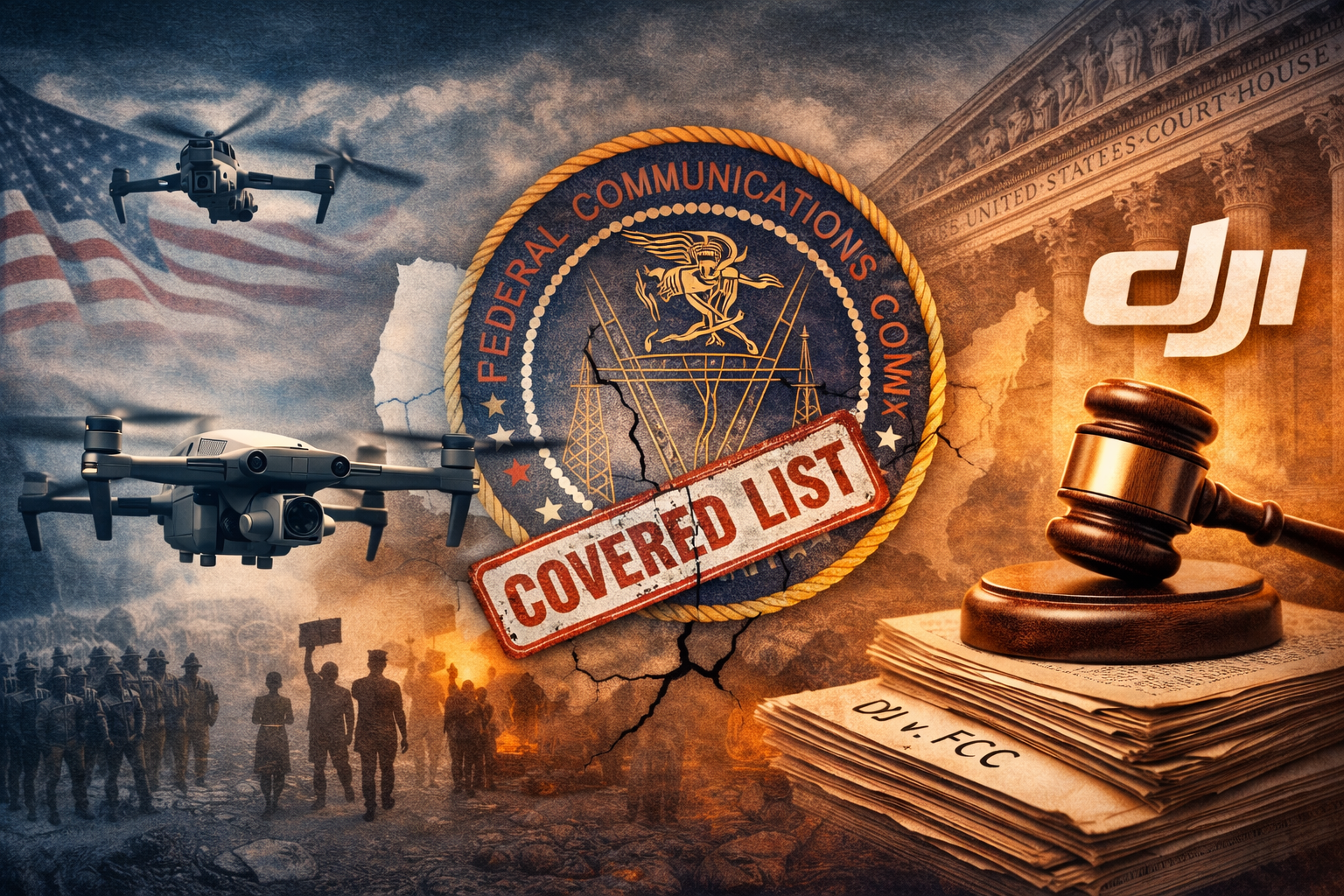
DJI, the world’s leading civilian drone manufacturer, has launched a legal challenge against the Federal Communications Commission (FCC) following the agency’s December 2025 decision to add DJI’s products to its Covered List. The lawsuit, filed on February 20 in the U.S. Court of Appeals for the Ninth Circuit, marks a significant escalation in the ongoing tension between U.S. regulators and Chinese technology firms.
The FCC’s ruling added foreign-made drones and certain critical components—including new DJI products—to its Covered List, a designation reserved for communications equipment deemed to pose national security risks. While previously approved DJI models are not directly affected by the ruling, the company argues that the decision has been used to severely restrict its ability to import both existing and new products into the United States.
In its filing, DJI contends that the FCC’s action is “procedurally and substantively flawed.” According to a company statement, the agency has not identified any specific national security threat associated with DJI or its products, nor has it provided the company with an opportunity to respond to alleged concerns. DJI argues that these deficiencies violate both constitutional protections and federal law.
The company’s legal team includes former FCC Enforcement Bureau Chief Travis LeBlanc and former U.S. Solicitor General Elizabeth B. Prelogar. The petition requests that the Ninth Circuit vacate and set aside the FCC ruling and grant any additional relief deemed appropriate by the court.
Industry Implications
The case carries significant implications for the U.S. commercial drone sector. DJI has long held a dominant position in both consumer and enterprise markets, serving industries ranging from agriculture and construction to public safety and media production. Its drones are widely used by small businesses, emergency responders, farmers, and infrastructure inspectors.
Industry analysts note that the Covered List designation has already introduced uncertainty into fleet planning and procurement strategies. Organizations reliant on DJI hardware must now assess long-term viability, compatibility with evolving regulations, and potential supply chain disruptions.
The lawsuit also has broader ramifications beyond DJI. Other foreign drone manufacturers are closely watching the outcome, as it may shape how the FCC approaches future Covered List additions and enforcement actions. A ruling in DJI’s favor could recalibrate the regulatory framework governing foreign communications equipment. Conversely, if the FCC prevails, it may embolden further restrictions on imported drone technologies.
National Security vs. Market Access
The FCC’s Covered List was designed as a national security safeguard, preventing federal subsidies from supporting equipment deemed risky. DJI, however, asserts that the agency has not substantiated its concerns with publicly available evidence.
In its statement, the company emphasized its willingness to undergo independent and objective product reviews. DJI also argued that the ruling denies U.S. customers access to its latest technologies, while international markets remain unaffected.
“Americans across industries—including small business owners, public safety officers, farmers, and creators—have been and will continue to be affected,” the company said. DJI maintains that it takes product security seriously and remains open to constructive engagement with regulators.
A Prolonged Legal Path Ahead
Legal experts caution that resolution may take months or even years. Appellate review processes can be lengthy, particularly when constitutional claims are involved. During that time, market uncertainty is likely to persist.
For now, the dispute underscores a deeper geopolitical reality: technology regulation is increasingly intertwined with national security policy. As drones become critical infrastructure tools, the balance between safeguarding communications networks and preserving market competition will remain contentious.
The Ninth Circuit’s decision may not only determine DJI’s future in the U.S. market but could also define the regulatory trajectory for the broader drone industry in an era of heightened scrutiny and strategic competition.


.jpg)