Breakthroughs in Unmanned Systems 2025: Are We Still Building Drones or Quietly Rebuilding Power?
Every year, the unmanned systems industry celebrates progress.
More autonomy. Better sensors. Longer endurance. Stronger resilience.
But here’s the question few people ask when looking back at 2025’s biggest breakthroughs:
Are we witnessing incremental improvement — or a fundamental change in what unmanned systems actually are?
Because when you step back from the product launches and technical specs, a clear pattern emerges. The most influential unmanned technologies of 2025 were not about flying better. They were about staying relevant in environments where failure is no longer acceptable.
Across air, land, and sea, unmanned systems stopped behaving like tools — and started behaving like infrastructure.
Look at the platforms that captured the most attention.
In the commercial space, Ascent AeroSystems’ HELIUS nano drone didn’t impress because it flew farther or faster. It mattered because it delivered secure, NDAA-compliant capability with onboard AI in a sub-250g form factor — directly challenging the dominance of unsecured consumer systems.
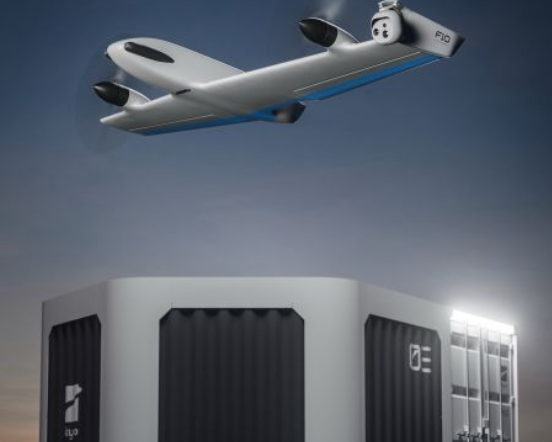
ZIYAN’s F15 autonomous docking station and Acecore’s Noa heavy-lift platform pointed to the same conclusion: drones are no longer expected to be episodic. They are expected to operate continuously, autonomously, and as part of an integrated workflow.
On the defense side, the message was even clearer.
TEKEVER’s AR3 Evolution, Red Cat’s FANG F7, and Rotron Aerospace’s Defendor UCAV didn’t just represent new airframes — they reflected a shift toward modularity, attritability, and scalable mass. And when GA-ASI successfully launched a Switchblade 600 from an MQ-9A, it quietly signaled the arrival of unmanned systems as deployable effects within larger ecosystems.
Ask yourself:
When drones become payloads for other drones, are we still talking about aircraft — or distributed power?
Sensors told the same story.
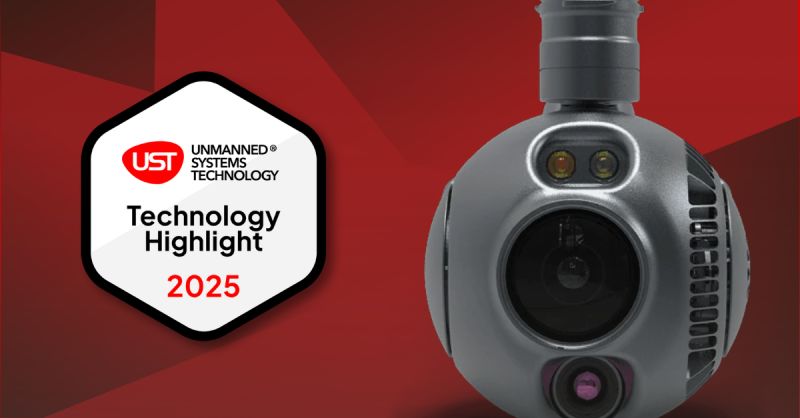
The most impactful payloads of 2025 weren’t the biggest or most complex. They were the most efficient. Trillium’s HD25 EO/IR gimbal, FT Technologies’ FT602 wind sensor, and Gremsy’s Orus L proved that intelligence is moving closer to the edge — lighter, smarter, and increasingly autonomous.
Navigation advances drove the point home. Systems like Advanced Navigation’s Boreas series and Hybrid Navigation System, HBK’s 3DM-CV7, and Honeywell’s HGuide o480 were not about convenience. They were about survival in GNSS-denied environments.
GPS is no longer guaranteed. And systems that assume it is are liabilities.
The same reality shaped growth in A-PNT security, counter-UAS, and anti-jam technologies. Layered defenses, resilient positioning, and swarm-aware detection are no longer optional. They are baseline requirements in crowded, contested airspace.
Energy and propulsion breakthroughs reinforced the trend. From Amprius’ 450 Wh/kg batteries to Tulip Tech’s eight-hour DeltaQuad flight, endurance became a strategic metric — not a marketing one.
And beneath the surface, maritime autonomy accelerated just as quickly. USVs, AUVs, and UUVs moved closer to persistent, autonomous ocean operations — where communication is sparse and failure recovery is costly.
So what does all of this mean?
It means the unmanned systems industry is no longer chasing novelty. It is chasing reliability, persistence, and integration.
The line between commercial and defense is blurring.
The line between platform and system is disappearing.
And the line between autonomy and infrastructure is dissolving.
2025 didn’t just deliver better drones.
It revealed a new expectation: unmanned systems must be trusted — continuously, securely, and at scale.
And that expectation will define 2026.
%20(1).png)
.jpg)