AURION Mk IV - The European Drone That Asks if Western Air Superiority Just Got Sharper or More Dangerous
There’s a moment in every military revolution when a weapon stops being just another tool and starts being a question — not just asked by generals and engineers, but by strategists, policymakers, and even citizens: “Are we ready for what this means?”
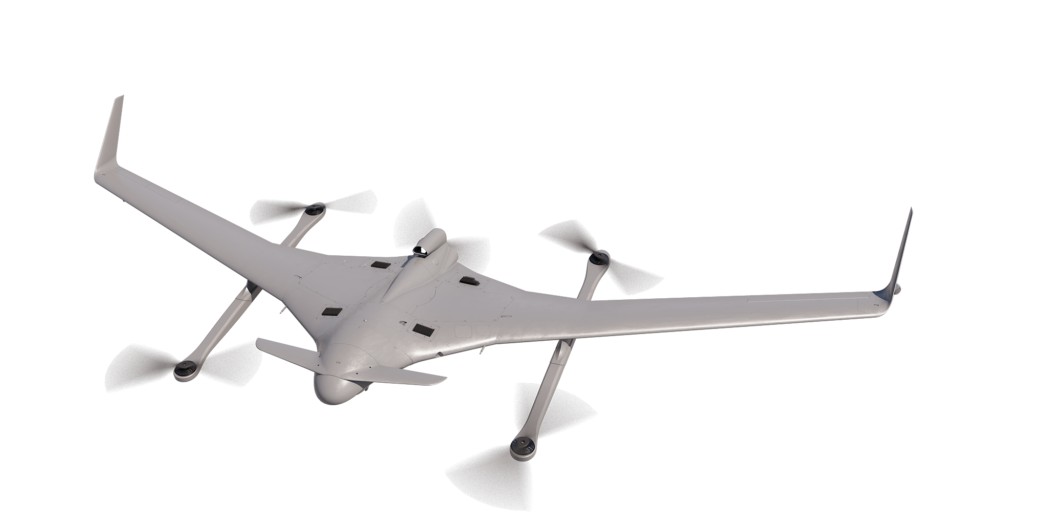
The AURION Mk IV tactical unmanned aircraft system isn’t just a new UAS. It challenges the very assumptions behind how Western and European forces think about battlefield intelligence.
At first glance, it looks like another tactical ISR platform: long endurance, flexible payloads, robust command and control. But look deeper, and you see something more unsettling and revolutionary — a drone that refuses to be boxed in as “just reconnaissance.” It’s a battlefield integrator, a persistent overseer, an asset that ticks boxes most legacy systems can’t even reach.
AURION Mk IV weighs in with a 55 kg maximum take-off weight and can carry up to 12 kg of payload — small by MALE UAS standards, but enormous in capability. It delivers up to 24 hours of endurance, with runway-independent VTOL deployments or launcher/parachute operations that extend on-station time. That isn’t endurance — that’s persistence.
The mission payload spectrum is where this system gets provocative. AURION supports simultaneous dual payloads — think high-resolution EO/IR optics with designators, SAR for broad area search, maritime AIS, or COMINT/EW suites — the kind of integrated sensor fusion armies once dreamed about but never practically deployed in a tactical footprint.
So here’s the central question:
Are drones still just tactical ISR tools — or are they becoming the nervous system of tomorrow’s battlespace?
AURION’s encrypted and resilient command and control infrastructure tells you where the industry is heading. Beyond-Line-of-Sight (BLOS) capability, AES-256 encrypted datalinks, millisecond-class secure uplinks, and redundant communications — this is not a hobbyist toy. This is battlefield infrastructure.
But what is infrastructure if not persistent, networked, and impossible to ignore?
Deploy AURION Mk IV in a contested electromagnetic environment — GPS-denied or jammed — and it continues to navigate, link, and dominate the airspace around it. Its network relay datalink mode puts it halfway between a sensor node and a command node, allowing downstream platforms and forces to share a common operational picture.
This is where it becomes more than hardware. It becomes strategic leverage.
Ask any defense planner today: situational awareness is no longer a luxury. It’s a lifeline. Persistent airborne networks are quickly outpacing legacy ground or space systems in speed, resolution, and adaptability.
AI-Armaments didn’t just build another drone. They built a force multiplier — one that can be launched from confined or austere locations, reconfigured on the fly based on mission needs, and kept operational with a compact logistical footprint. That creates options commanders always wished they had.
Yet with great capability comes a deeper question: what happens when opponents also field systems of equal or greater persistence — in numbers, autonomy, and intelligence?
The AURION Mk IV doesn’t just narrow the technology gap. It widens the conceptual gap between what militaries think they can do and what they must now prepare for. In a world where drones operate as integrated nodes across air, land, sea, and cyber domains, the surface simplicity belies the battlefield complexity beneath.
So perhaps the real question isn’t “How good is AURION?”
It’s:
Are we ready for the era where drones are not tools — but the backbone of modern warfare?
Once platforms like Mk IV are operational at scale, the skies stop being empty corridors. They become infrastructure — continuously sensing, communicating, and shaping decisions on the ground, at sea, and in the air.
And that changes everything.