Athena Security Unveils AI X-Ray Model to Detect Hidden Drone Components at High-Security Facilities
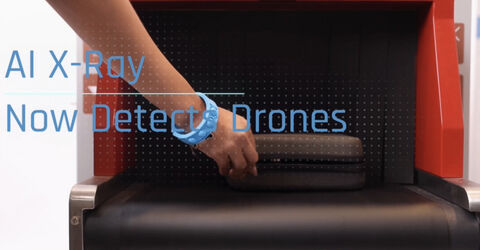
Athena Security has introduced a new AI-powered X-ray screening model designed to detect concealed and pre-assembled drone components before they enter restricted areas. The system integrates machine learning into existing X-ray infrastructure to identify motors, propellers, batteries, electronics, and structural parts often used to assemble drones covertly. The launch comes as critical industries face a measurable rise in drone incursions, unauthorized flights, and weaponized UAV threats worldwide.
The company developed the Drone Defense Detection Model in response to a notable increase in illegal drone activity, particularly incidents involving drones being smuggled or assembled from components inside secure perimeters. With reported incursions in the U.S. up more than 25% in the past year and major international incidents increasing by more than 60%, airports, energy facilities, transportation hubs and government agencies are now seeking proactive measures rather than reactive defenses.
Recent conflicts have demonstrated how accessible drone technology has become. Small commercial systems costing under $1,000 have been repurposed for reconnaissance, explosive delivery, sabotage, and infrastructure attacks. During one coordinated strike in October 2025, over 300 drones and missiles were launched simultaneously at Ukraine’s energy grid, causing widespread power disruptions. Civil aviation has also been impacted: airports such as Munich and Copenhagen have experienced temporary shutdowns due to drone-related disruptions, grounding flights and creating economic ripple effects.
Athena Security aims to address these evolving risks by identifying threats before they become airborne. Detecting components rather than only operational drones adds a new layer of defense – closing a critical vulnerability where drone parts could be transported discreetly inside luggage, parcels, or cargo shipments and assembled later near or inside secure facilities.
Chris Ciabarra, Co-Founder and CTO of Athena Security, explains the mission clearly:
“Today’s drones are inexpensive, stealthy and scalable. Waiting for an incident is no longer a viable defense. Our goal is to give critical infrastructure operators a chance to stop threats before they reach the secure perimeter — whether the threat arrives by backpack, cargo bay, or is assembled onsite.”
Capabilities of the Drone Detection Model
- High-fidelity feature recognition that can identify drone motors, electronics, structural frames, battery packs and propellers — even when the parts are compact or disguised.
- Low false-positive optimization, critical for busy checkpoints and cargo screening environments.
- Security system integration, allowing alerts, automated lockdown procedures or operator intervention when suspicious components are detected.
- Scalability, supporting deployment at airports, perimeter gates, logistics entry points and unmanned stations.
Athena developed the model after a client experienced a drone intrusion incident that exposed vulnerabilities in their perimeter security. They approached the company seeking a way to prevent drones — or their components — from entering restricted airspace again, driving the creation of this counter-threat capability.
The new AI detection feature expands Athena Security’s existing AI X-ray toolkit, previously focused on identifying conventional threats such as firearms and knives. With drone misuse accelerating globally for surveillance, smuggling, contraband delivery and military disruption, this added specialization may prove vital for organizations preparing for next-generation threat vectors.
Athena is now working with federal, state, and municipal agencies on deployment pilots, while simultaneously exploring collaborations with counter-UAV vendors, electronic warfare providers and security integrators to build layered defense networks that combine detection, interdiction and response.
In an era where low-cost drones can cause high-impact consequences, proactive detection may be the key to ensuring that threats never leave the bag — or the cargo crate - in the first place.