Apply for Request for information on Airspace Monitoring and C-UAS solutions for dual-use at European Defence Agency

Europe is sending a clear signal to industry: the airspace is becoming a domain of strategic importance, and complacency is no longer an option. On 22 April 2026, the European Defence Agency (EDA) launched a market consultation on Airspace Monitoring and Counter‑Uncrewed Aircraft Systems (C‑UAS) for dual‑use military and civil missions, inviting innovators across the globe to step forward.
This is not a call for weapons procurement—yet. It is something arguably more consequential: a structured effort to understand what technologies exist, where the gaps remain, and how Europe’s Member States might procure and deploy capabilities in a rapidly contested airspace.
A crowded, contested, and converging sky
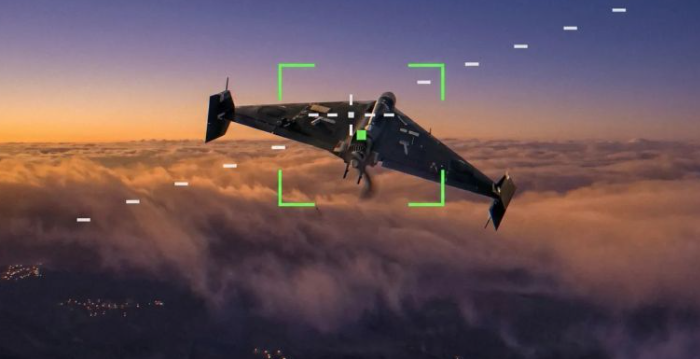
Uncrewed aircraft are no longer limited to controlled military environments or isolated civilian use cases. Small, agile, and increasingly autonomous systems now share the same skies as commercial aircraft, emergency helicopters, and critical infrastructure corridors. At the same time, non‑collaborative aerial threats—drones that do not broadcast identity or comply with airspace rules—are becoming both more accessible and harder to counter.
EDA’s Request for Information (RFI) reflects this reality. The Agency is explicitly seeking insight into detection, tracking, classification, identification and neutralisation, as well as the command‑and‑control (C2) systems that tie these layers together. The focus is not on a single sensor or effector, but on architectures that can operate across civil‑military boundaries.
Why dual‑use matters now
The emphasis on dual‑use missions is telling. Civil authorities face many of the same airspace risks as military operators: unauthorised drones near airports, ports, public events, energy facilities, and transport hubs. The distinction between “defence” and “homeland security” becomes blurred the moment a non‑collaborative aircraft appears over a populated area.
EDA’s consultation aims to map solutions that can be deployed, integrated and sustained in both contexts—highlighting lifecycle, logistics, security of supply, and operational experience alongside raw performance. This is a strong signal that future procurements will prioritise scalability and resilience, not just technical novelty.
A strategic listening exercise
Formally, the RFI is positioned as a market consultation, open from 22 April to 22 May 2026. It does not initiate a tender, create obligations, or guarantee follow‑on contracts. But strategically, it performs several critical functions.
First, it allows EDA and Member States to engage with the market—to understand what is mature, what is emerging, and what remains aspirational. Second, it promotes transparency, encouraging information‑sharing and competition across the industrial base. Third, it helps refine procurement strategies, moving away from reactive, crisis‑driven acquisitions toward informed, capability‑driven planning.
Perhaps most importantly, it enables EDA to identify gaps—not only in hardware, but in methodologies, integration approaches, and operational concepts. Closing these gaps is where real innovation begins.
Who should be paying attention
The target audience is deliberately broad: economic operators, developers, manufacturers, and integrators of any origin, regardless of their current access to the EU market. While the European Defence Technological and Industrial Base is a core focus, the consultation is open to global players with relevant expertise.
Submissions are treated confidentially under EDA policies, but information may be shared with Member States to support future procurement, experimentation, or cooperative projects. EDA also reserves the right to follow up for clarification or verification—underscoring that this is a serious intelligence‑gathering exercise, not a box‑ticking formality.
Reading between the lines
The timing matters. As Europe accelerates the integration of drones into civil airspace while confronting evolving security threats, airspace control becomes a prerequisite for autonomy, not an afterthought. Monitoring and C‑UAS are no longer niche defence capabilities—they are foundational enablers for the safe use of the air domain.
EDA’s message is subtle but firm: if you want a role in shaping Europe’s future airspace, now is the moment to speak up.