Anduril’s AI Is Hunting Underwater Drones Before Humans Even Know They’re There
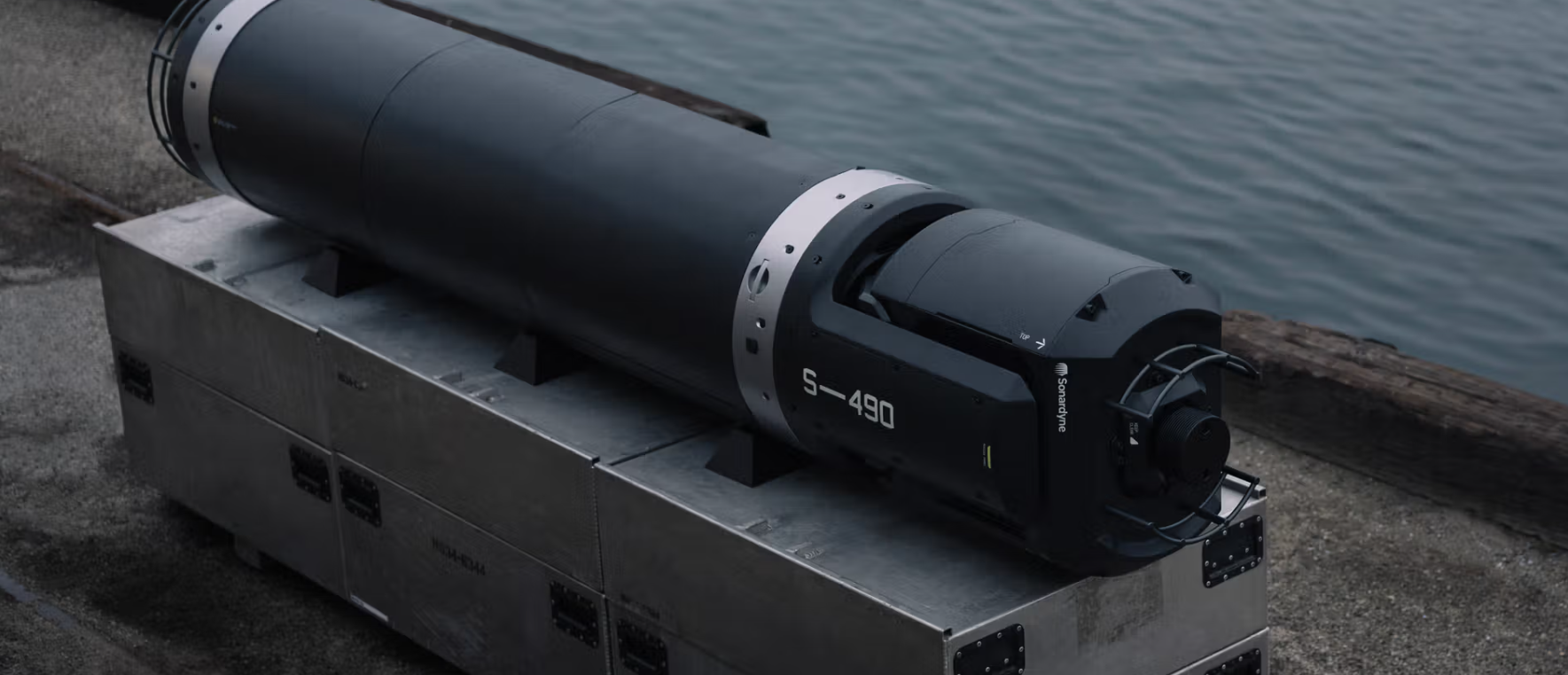
Submarines.
Massive steel vessels carrying torpedoes, missiles, and strategic consequences.
But the next underwater threat may not be a submarine at all.
It may be something far smaller, far cheaper, and far more difficult to detect.
An autonomous underwater drone.
And according to Anduril Industries, the technologies needed to counter that threat are no longer theoretical.
They are already being tested.
During the U.S. Navy's multinational Lanternfish exercise, Anduril demonstrated an integrated underwater surveillance and tracking capability designed to detect, classify, and share information about autonomous underwater vehicles (AUVs) in real time. The demonstration is a glimpse into what future maritime security may look like as ports, harbors, offshore infrastructure, and naval bases face a rapidly evolving threat landscape.
The Battlefield Nobody Sees
Public attention tends to focus on drone warfare in the air.
Videos of quadcopters, loitering munitions, and autonomous aircraft dominate headlines.
But beneath the ocean surface, a similar revolution is underway.
Autonomous underwater vehicles are becoming increasingly capable, affordable, and accessible. They can conduct surveillance, gather intelligence, map infrastructure, disrupt shipping routes, or potentially threaten critical maritime assets.
And unlike airborne drones, underwater systems operate in one of the most hostile and difficult environments imaginable.
Visibility is minimal.
Communications are limited.
Detection is challenging.
Reaction times can be short.
That makes underwater threats particularly dangerous.
A hostile underwater vehicle approaching a harbor, pipeline, energy terminal, or naval installation may be nearly impossible to detect without specialized systems working continuously.
From Detection to Decision in Seconds
What made the Lanternfish demonstration significant was not a single sensor.
It was the integration.
Anduril paired its Seabed Sentry system with Ultra Maritime's Sea Spear sonar platform. During the exercise, Sea Spear detected and tracked underwater vehicles, while Seabed Sentry processed that information and fed it into Lattice, Anduril's command-and-control platform.
The crucial part came next.
Lattice automatically passed the operational picture into the Navy's own command-and-control architecture, allowing operators inside the Navy's Unmanned Operations Center to see detected threats in real time.
No manual handoff.
No fragmented systems.
No delays caused by multiple layers of interpretation.
The result was a connected kill chain that moved information from sensor to operator with minimal friction.
In military operations, speed often matters more than firepower.
The side that understands the situation first frequently gains the advantage.
AI Leaves the Sky and Enters the Ocean
Anduril's Lattice platform has already established a reputation in air defense and counter-drone missions by combining information from multiple sensors into a single decision-making environment.
Lanternfish suggests that the same concept can work underwater.
The significance extends beyond a single exercise.
Defense organizations worldwide increasingly recognize that future conflicts will not be fought in separate domains.
Air.
Land.
Sea.
Space.
Cyber.
These environments are becoming interconnected.
The challenge is building command-and-control systems that operate across all of them.
By using a common software architecture for both aerial and underwater threat detection, Anduril is pursuing a vision in which commanders receive a unified operational picture regardless of where a threat originates.
That approach could become one of the defining characteristics of modern defense networks.
Why Ports and Infrastructure Are Suddenly Vulnerable
The strategic implications are enormous.
Ports, harbors, coastal energy facilities, undersea communications cables, and critical maritime infrastructure form the backbone of global commerce and national security.
Many of these assets were designed with traditional threats in mind.
They were not designed for swarms of autonomous underwater systems.
A small underwater drone can be difficult to spot, relatively inexpensive to produce, and potentially capable of causing significant disruption.
The challenge is not merely detecting one vehicle.
It is identifying many of them simultaneously while providing decision-makers enough time to respond.
That requires automation.
It requires machine-speed processing.
And increasingly, it requires artificial intelligence.
The Rise of Autonomous Defense
Lanternfish highlights a broader transformation underway across defense technology.
The future is not simply about building better sensors.
It is about connecting sensors, software, operators, and response systems into one intelligent network.
The same layered-defense philosophy that emerged in air defense is now moving underwater.
Detect.
Track.
Classify.
Alert.
Respond.
All at machine speed.
The oceans have long hidden military threats beneath the surface.
What is changing is our ability to see them.
And if Anduril's Lanternfish demonstration is any indication, the next chapter of maritime security may be driven less by ships and submarines than by software, autonomy, and artificial intelligence operating silently beneath the waves.
The underwater battlefield is no longer invisible.
And the race to control it has already begun.

.jpg)