Alticam X - The Eye That Never Blinks and How Hood Tech Vision Is Redefining Autonomous Perception

In a world where speed defines survival and data defines power, vision systems are no longer passive sensors—they are decision-makers. Enter Alticam X, the latest evolution from Hood Tech Vision, a system that challenges one of the oldest assumptions in aerospace: that cameras only observe.
Alticam X does not observe. It understands.
For decades, airborne imaging systems were constrained by a simple pipeline: capture, transmit, process. The delay between seeing and knowing was accepted as inevitable. But in high-stakes environments—whether search and rescue, ISR missions or critical infrastructure monitoring—that delay is no longer tolerable.
Alticam X collapses that gap.
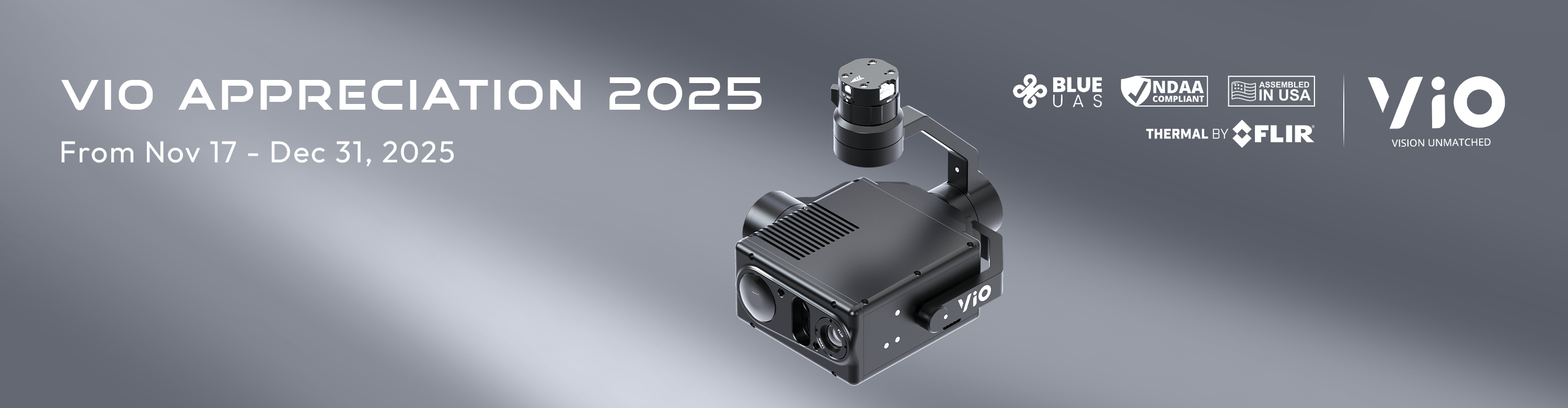
At its core, the system merges four-axis stabilization with onboard AI processing, enabling drones to not only capture imagery but interpret it in real time. This is not just about better resolution or stronger zoom. It is about shifting intelligence from the ground station to the edge—from humans to machines.
And that shift changes everything.
Traditionally, gimbal systems were judged by mechanical excellence: stability, durability, precision. But Alticam X signals a new hierarchy where software defines performance. The optics are still world-class—multi-spectral imaging, high zoom capabilities, low-SWaP efficiency—but the real innovation lies in what happens after photons hit the sensor.
Data becomes action instantly.
A moving target is no longer something an operator tracks—it is something the system predicts. Environmental noise is no longer filtered later—it is processed at the source. The drone no longer sends video—it sends insight.
This transition is not incremental. It is architectural.
By integrating advanced processing directly into the gimbal, Hood Tech Vision eliminates the dependency on external computing infrastructure. This reduces latency, minimizes bandwidth demands, and significantly enhances operational autonomy. In practical terms, it means fewer people, faster decisions, and dramatically increased mission success rates.
But there is a deeper implication—one that goes beyond engineering.
Alticam X represents a philosophical shift in how we design machines. Instead of building tools that extend human capability, we are building systems that replicate—and in some cases exceed—human perception. The gimbal is no longer a component. It is becoming a cognitive node.
This raises new expectations.
Customers no longer ask, “How stable is the image?” They ask, “What can the system understand?” Reliability is no longer just mechanical uptime—it is decision accuracy. Performance is no longer measured in resolution—it is measured in outcomes.
And with these expectations comes a new competitive landscape.
Manufacturers that continue to focus solely on hardware optimization risk becoming obsolete. The future belongs to those who can seamlessly integrate optics, software, and data intelligence into a unified system. Hood Tech Vision appears to understand this better than most.
Alticam X is not just a product release. It is a statement.
A statement that the era of passive sensing is over.
A statement that autonomy begins at the sensor level.
A statement that vision—true vision—is no longer about seeing.
It is about knowing.

%20(1).jpg)